Always keyed to growth, fund aims at India
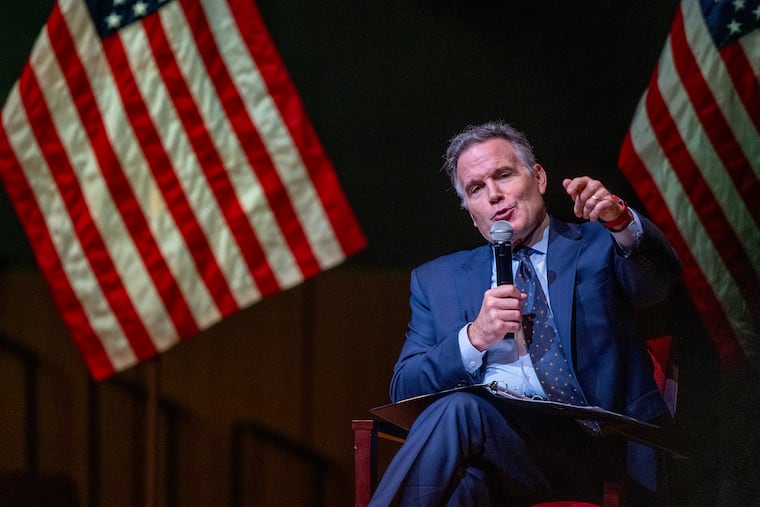
Federated Kaufmann Fund's Lawrence Auriana and Hans Utsch, whose bets on the fastest-growing U.S. companies made them top-ranked managers over the last two decades, say India is the future.
Federated Kaufmann Fund's Lawrence Auriana and Hans Utsch, whose bets on the fastest-growing U.S. companies made them top-ranked managers over the last two decades, say India is the future.
They have 15 percent of the $11.5 billion mutual fund invested in Indian companies, including mortgage-lender Housing Development Finance Corp. Ltd. and wireless operator Bharti Airtel Ltd. That compares with a 1 percent allocation in Asia's emerging markets for the fund's competitors, according to data compiled by Chicago-based research firm Morningstar Inc.
"We're always looking for growth, and the growth right now is going on in India and China," Auriana said in an interview in his New York office. "The valuations aren't as extreme in India as they are in China."
Kaufmann Fund rose 21 percent in 2007, better than 87 percent of its peers that concentrate assets in midsize companies with above-average sales or earnings growth, data compiled by Bloomberg show. The fund has gained at an annual rate of 15 percent since 1987, their first full year, ranking it No. 1 of 34 rival funds, according to Denver-based research firm Lipper Inc.
Auriana, 64, and Utsch, 71, were early investors in technology and health-care stocks in the 1990s and took short positions and sold technology holdings before the Internet bubble burst in 2000. They opened the fund with $3 million from a group of investors that included hedge fund manager Robert Wilson.
Among the fund's Indian bets in 2007 were Mumbai-based Housing Development Finance, the country's second-biggest mortgage lender, and New Delhi-based Bharti Airtel, its largest wireless-network company.
Housing Development, partly owned by Citigroup Inc., advanced 77 percent last year on demand for loans in an economy that has grown at an average pace of 8.6 percent over four years. The company was Kaufmann Fund's No. 3 holding as of Dec. 31.
Bharti Airtel, the fund's fifth-biggest position, gained 58 percent in 2007. The company, controlled by billionaire Sunil Mittal, agreed in December to sell a $1 billion stake in a unit to investors, including Citigroup and the Goldman Sachs Group Inc. The same month, Standard & Poor's raised Bharti Airtel's debt rating to investment grade for the first time after the company reported a total of 48.9 million users as of Sept. 30.
Rising wages in India have increased wealth, fueling booms in real estate, banking services and consumption. The Bombay Stock Exchange Sensitive Index rose 49 percent, including reinvested dividends, in 2007. The U.S. benchmark Standard & Poor's 500 index returned 5.5 percent in the same period.
Morningstar gives the Kaufmann Fund four of a possible five stars. Its one-year Sharpe ratio is 0.72, compared with 0.11 for the peer group, according to Bloomberg data. A higher Sharpe ratio means better risk-adjusted returns.
Morningstar recommends against investing in the fund because its 1.95 percent expense ratio is higher than 90 percent of similar funds and because Utsch invests only $10,000 of his own money in the fund. Utsch declined to comment.
Auriana, in response, said the fund rose an average of 20 percent over five years. The S&P 500 climbed 11 percent.
"You can't argue with the results," Auriana said. "Success is our revenge" on Morningstar.
Auriana, Utsch and colleague Peter Lerner in December agreed to a new employment contract with Federated Investors Inc., which purchased the managers' Edgemont Asset Management Corp. in 2001. The contract runs through 2014 and pays them $15 million this month and as much as $26.5 million more by 2011.
Federated, based in Pittsburgh, also agreed to start the Federated Kaufmann Large Cap Fund, which Auriana said he hoped would grow to at least $5 billion. In 2002, the managers started the Federated Kaufmann Small Cap Fund.
At the Kaufmann Fund, Auriana and Utsch cut holdings in stocks linked to consumer spending, such as MasterCard Inc., in the second half of the year because of the slowing U.S. economy. MasterCard, the world's second-biggest credit card company, based in Purchase, N.Y., rose 68 percent in the first half and 30 percent in the second half.
Auriana said he had seen "terrific buys" in industries that have suffered losses, including retailing, financial services and housing. He declined to disclose those possible investments.
The Kaufmann Fund seeks growth companies that are "leaders in their area of expertise," Auriana said. Turnover is 49 percent, meaning the fund's holdings change once every two years, compared with 118 percent for the average mid-cap growth fund, according to Morningstar.
The biggest gainers for the fund in 2007 included Phoenix-based solar-module-maker First Solar Inc., which rose almost ninefold, and silicon-wafer-producer MEMC Electronic Materials Inc., of St. Peters, Mo., which more than doubled.
Federated Kaufmann Fund
Managers:
Lawrence Auriana, Hans Utsch.
Assets:
$11.5 billion.
Performance:
Up
21 percent in 2007.
Key holdings:
Housing Development Finance, Bharti Airtel.
Ticker:
KAUAX.
SOURCE: Bloomberg News