AS THE Pennsylvania General Assembly returns to session today, we like to imagine their reaction if they returned to the statehouse finding the place hadn't been cleaned over the summer, that there were no security guards at the doors, and half their staff had been cut so they had to answer their own phones.
How long do you think that situation would last? A day? An hour?
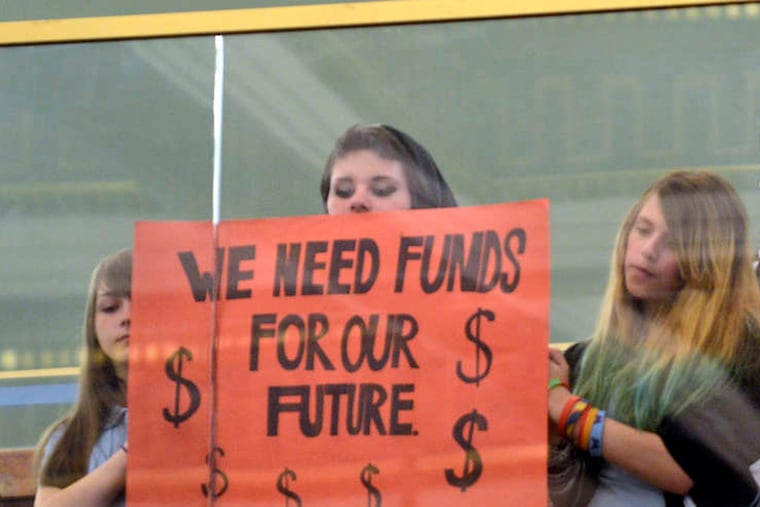
Yet those are largely the circumstances awaiting schoolchildren in Philadelphia when they began their school year last week: cuts to staff including cleaning and security, made by Superintendent William Hite to assure the schools would open on time. Last month, Hite narrowly restored SEPTA passes that allow students to get to school. From all accounts, kids started the school year on a positive note, and things went smoothly.
But that's no thanks to Harrisburg. Lawmakers left for the summer having failed to pass an increase in the city's cigarette tax that would help fill an $81 million hole in the school budget. What should have been a simple solution became a legislative boondoggle. This week, they have a chance to rectify this. If they don't, more devastating cuts will be in the offing.
And if they don't, the easy-street jobs of lawmakers, helped by fat budgets, generous per-diems and car allowances become even more out of touch with the reality of thousands of children trying to get educated.
Even if the tax passes, the larger public-school funding questions are still left ungrappled with: How do schools, especially poorer districts like Philadelphia's, ever hope to improve with the constant battle for more money, and ongoing cuts?
And don't be mistaken, cuts have been made. Gov. Corbett keeps promoting the fantasy that his administration has given more to schools than any time in the state's history.
That's just wrong. When Corbett took office, the schools had received federal stimulus funds which, when they ran out, were never restored. And according to Pennsylvania Budget and Policy Center, half the cuts made in 2011 were made to programs that had not received federal funds.
In addition, a portion of the money that flows to charter schools from the districts used to be reimbursed by the state; that ended with Corbett, a hole that if still in place, would mean more than $100 million to the district. This year, the district will pay $767 million to charter operators, 31 percent of its budget.
In fact, once they approve the cigarette tax, Harrisburg needs to renew its attention to charter schools. The reform bills that have been brought up in the past have been unsuccessful - which for the most part is a good thing, since many included provisions that would have eased expansion of charters without any change to the inadequate oversight and controls that currently exist. Cyber charters still receive the same funding as bricks-and-mortar charters, for example.
Mainly, though, Harrisburg needs to reckon with the realities of public education, including the reality in Philadelphia: Over the past few years, the district has cut thousands of jobs, trimmed administrative costs and closed 31 schools in the face of inadequate funding, while costs of benefits and pensions continue to rise. The reform of public education remains a popular policy sentiment, but for too long, "reform" has been just another word for starving the system instead of investing in changes that could make a difference.