The rising religious left seems new, but that’s only half right
Religiously inspired liberal activism has flown below the radar over the last 50 years because the left recoiled from the religious right's rhetoric and shied away from replicating it.
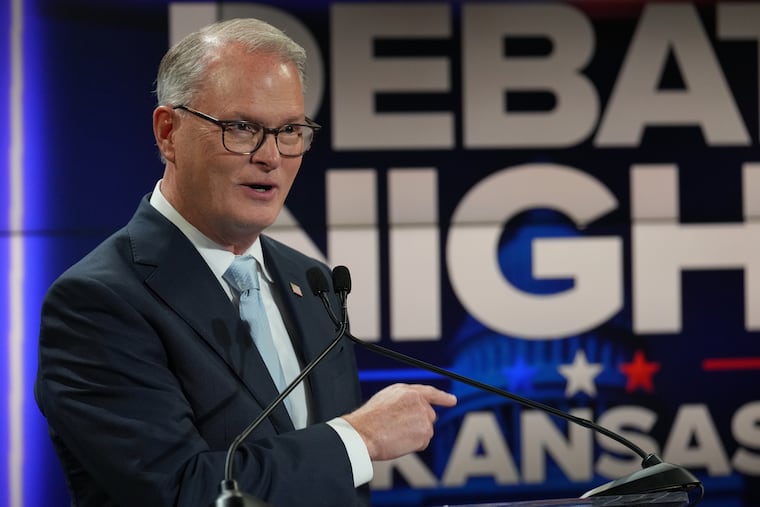
With the midterm elections less than a week away, mentions of Jesus seem to be at an all-time high in campaign speeches and literature — and not just from Republicans.
Openly religious Democratic candidates, including several ministers, like James Talarico, Adam Hamilton, Sarah Trone Garriott and Lindsay James, have captured the attention of the media because they seem to represent something new. Their arguments on policy topics as diverse as the struggles of working people and anti-immigrant violence seem to be very different from the secular cases Democrats have made in recent decades.
Indeed, for a quarter century, journalists have chronicled how a “God Gap” has emerged between an increasingly religious right and a secular left. Republicans have embraced prayer breakfasts, Bible study and other overt displays of religiosity. Perhaps not surprisingly, then, regular church attendance has become one of the most reliable indicators of support for the GOP at the polls.
Yet, while the religious right has generated attention, a closer examination of religiosity in this period reveals a progressive political landscape teeming with spiritually driven movement activism. This brand of religious progressivism has deep roots, but its most recent chapter has escaped attention, because liberals have shied away from openly theological rhetoric, while still retaining their religious inspiration.
In the middle of the 20th century, divinely inspired activism leaned left as well as right. The movement most familiar to Americans in this period, the Southern Freedom Struggle for civil rights, articulated demands for justice rooted in Old Testament narratives of liberation and Gospel teachings about the dignity of every human regardless of class and race.
In 1955, the Rev. Martin Luther King Jr. illuminated the religious inspiration for the movement when he quoted the story of Lazarus and the rich man to condemn “the white man who refuses to cross the gulf of segregation and lift his Negro brother to the position of first-class citizenship.”
Even once King’s organization, the Southern Christian Leadership Conference (SCLC), began focusing more on economic justice and the poor people’s campaign in the late 1960s, it continued to rely on the Gospels to orient its message and activism.
Religion also inspired the other major movement in the 1960s: the protests against the Vietnam War. In 1968, for example, nine men and women ransacked a draft board outside Baltimore. The “Catonsville 9” took conscription files, which they proceeded to burn in napalm (the chemical the U.S. government was then using to deforest Vietnam) while saying the Lord’s Prayer. The event ignited what journalists quickly dubbed the “Catholic Left” because of the dominance of priests, nuns, missionaries and devout lay people.
In 1971, this movement burst into the public consciousness in the Delaware Valley when the FBI interrupted a similar draft board raid, this time unfolding on the upper floors of the Camden Federal Building. Agents had infiltrated the group with the assistance of an informant who helped the Bureau collect evidence that ultimately led to the apprehension and indictment of multiple conspirators who become known as “the Camden 28.”
In 1973, the group’s three-month trial generated national attention as reporters covered the defendants’ unconventional testimony, which included self-representation, Scripture and poetry readings. Father Michael Doyle, one of the accused, set the atmosphere with his opening statement. He asked, “to present a motion to a higher court than this one … and make a request that a blessing of truth and a spirit of truth would come upon the deliberations of this room.” Doyle hoped that everyone involved “might somehow be better because we met in this time and place.”
When the jury acquitted the men and women who had stated point-blank that they did indeed commit the crimes for which they were charged, supporters celebrated the decision as a victory for love and nonviolence over the war machine and surveillance state. Joining hands, the crowds inside and outside the court room embraced and sang “Amazing Grace.”
By the time of the Camden action in 1971, one of the last, the Catholic Left had raided more than 50 facilities, destroying more than a million draft files. The draft ended about two years later.
As the Camden 28 were capturing headlines in the early 1970s, however, another religious movement was also coalescing. Conservative evangelical Christians, Catholics and Mormons came together to fight against ratification of the Equal Rights Amendment, sex education, the legalization of abortion and the push for gay rights. Churches were a key place for organizing, and the Christian right wove religious rhetoric and doctrine into its agenda as well.
This new movement demonstrated its ability not only to reach across denominational lines like the left, but also to organize and raise money, when groups like the Moral Majority helped Ronald Reagan to win the presidency in 1980.
The religious gap between left and right intensified over the next two decades as the “right to life” movement galvanized religious voters at all levels of politics.
Abortion clinic demonstrations played no small role in the 2000 election of President George W. Bush, an avowed evangelical Christian who in a primary debate cited Jesus Christ as his favorite philosopher. The 9/11 terrorist attacks intensified the divide by inspiring a forceful atheist critique of religion as a harmful influence that inspired violent extremism and stymied scientific progress.
The success of the religious right impacted the left by dampening religious expression in Democratic politics. Disgusted by white evangelical leaders who used the Bible to justify sex-based discrimination and cuts to the welfare state, liberals and progressives came to abhor Christian expression by politicians.
Shying away from religious rhetoric in their own advocacy, liberals developed a rights-based vernacular and a decidedly secular vision of plurality. At the 2004 Democratic National Convention, presidential nominee John Kerry — a church-going Catholic — claimed a moral high ground derived from not religious virtues, but from national ones that made the United States a “beacon” of freedom needed “to lead a global effort against nuclear proliferation.”
When Democrats did refer to their religion, it was almost always to discuss its role in the formation of their character and how it inspired their decision to become public servants — not to advocate for policies. As Barack Obama explained when he launched his run for president in 2007, Chicago was important to him because it was there “that I received the best education I ever had, and where I learned the true meaning of my Christian faith …”
For decades, this impulse to eschew religious rhetoric when it came to policy extended even to Democrats who freely leaned on their faith, like former House Speaker Nancy Pelosi, who extolled the beauty of Catholic encyclicals, and Pennsylvania Gov. Josh Shapiro, who encouraged young Jewish voters to “wear your stars of David with pride.” Such comments signaled that religion was at the root of identity and moral conviction, but not policy prescriptions.
Yet, what many observers missed was that the absence of religious rhetoric from the Democratic Party did not signal the disappearance of religiously inspired activism from left-leaning politics altogether. While Democratic candidates shied away from linking their politics and policies to their faith, plenty of grassroots activism on the left was inspired by religious faith.
The Plowshares movement for peace, for example, emerged out of the Catholic Left. In 1980, the group undertook their first action at a General Electric weapons facility in Pennsylvania, where they damaged missiles, and left their own blood spattered on documents. Subsequently, this movement adopted the biblical injunction to “beat swords into plowshares,” and orchestrated more than 100 such demonstrations. While their activism led to prison sentences, they received nowhere near the attention garnered by Christian activists in the 1960s.
Around this time, religious groups on the left also began demonstrating for environmental justice at toxic waste sites as, for example, Black and white evangelicals did in 1982 to stop a PCB dumping site in Warren County, N.C.
Such activism has remained constant over the years. During the Trump era, people of faith have protested at immigration detention centers with prayers and Eucharistic celebrations, which, in some cases, has provoked a violent reaction from law enforcement.
The religious left, in other words, never stopped organizing — even though the press, the Democratic Party and larger public paid it little to no attention.
This history illuminates that while the overtly religious rhetoric of Democratic candidates in 2026 may represent a tactical shift, faith never stopped motivating liberal activism.
This current slate of ordained and soon-to-be-ordained candidates will not likely draw support away from the Republican base of Christian nationalists. Nevertheless, the grift and cruelty of the current administration has created an opening for these Democrats to overturn some tables and knock down some chairs in the temple.
The captivating vigor of these candidates should force political observers to consider the deep wellspring of religious teachings and tradition that have flourished on the left but flown below the radar for decades. The history of that activism helps explain why the campaigns waged by Hamilton, Talarico, Trone Garriott, James and others are animating so many voters.
Michelle Nickerson is Professor of History at Loyola University Chicago. Her most recent book Spiritual Criminals: How the Camden 28 Put the Vietnam War on Trial, examines the relationship between faith and political activism in the political left of 1960s America)
Made by History takes readers beyond the headlines with articles written and edited by professional historians. Opinions expressed do not necessarily reflect the views of The Inquirer.