Philly is once again looking at a $1-per-ride tax. But this time, it’s on the robots. | Council roundup
Also on Thursday, Council members expressed public skepticism in how Mayor Cherelle L. Parker’s administration is executing one of the mayor's signature initiatives.

Just last spring, Philadelphia City Council members rejected a controversial proposal by Mayor Cherelle L. Parker to tax rideshare in the city at $1-per-ride, saying that it would increase daily costs on residents.
But the same lawmakers who batted down that plan are now poised to consider another $1-per-ride tax. This time, it’s only for rides in cars without human drivers.
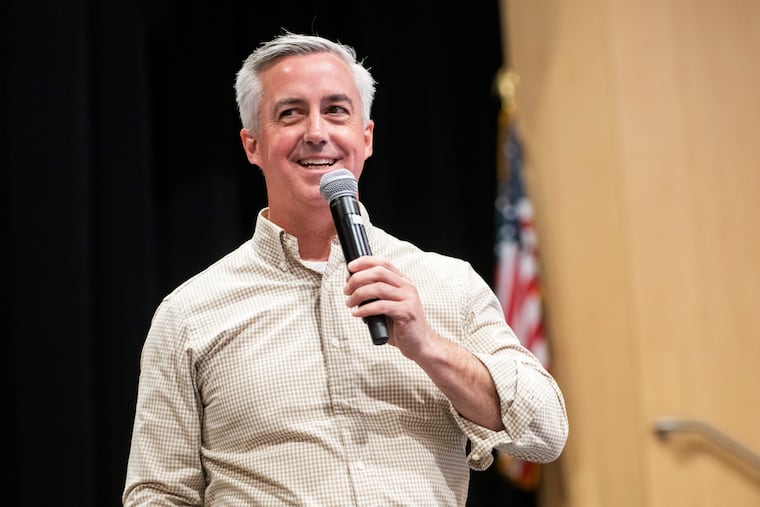
Councilmember Jim Harrity, a Democrat who represents the city at-large and opposed the rideshare tax in the spring, introduced legislation in Council Thursday to tax services performed by autonomous vehicles, such as driverless rideshare cars and sidewalk delivery robots.
The proceeds from the tax would fund the city’s Zero Fare program, which provides free public transit passes to low-income residents.
Harrity, an ally to organized labor, said the measure is aimed at protecting jobs, and that he hopes it will deter Philadelphians from relying on autonomous vehicles entirely.
“We’re already the second poorest big city in America, and now my neighbors are going to lose their second jobs to robots,” Harrity said Thursday. “It’s not fair.”
Also on Thursday, Council members expressed public skepticism in one of Parker’s signature initiatives. Lawmakers approved legislation authorizing the body to investigate whether the administration has delayed spending money that Council authorized to fund the mayor’s massive Housing Opportunities Made Easy, or H.O.M.E., program.
What was today’s highlight?
Tax the robots?: Harrity framed his proposal as something of an opening salvo in what he hopes becomes a broader fight against the proliferation of autonomous vehicles in the city.
He said that he is open to other solutions to preserve jobs as members consider his legislation, and that he could not estimate how much revenue his tax proposal would generate.
“In a perfect world,” he said, “no one will pay the tax because they’ll just ban the robots.”
Harrity’s legislation would levy a $1-per-ride fee — or 5% of the cost of the trip, whichever sum is greater — on companies that operate driverless taxi services. The most prominent is Waymo, which is currently testing driverless cars in Philadelphia.
The bill would also impose a fee of either 50 cents per delivery or 5% of the total cost on deliveries done by sidewalk robots, as well as a 3% tax on driverless freight vehicles that drive on city streets.
The tax would also apply to orders of food and other goods that are delivered by robots. Customers who order deliveries through platforms such as Uber Eats may have at times received their food from a sidewalk robot, however, those machines are operated by the third-party company Avride, not Uber itself.
Under the proposed legislation, which would take effect in January 2028, companies that operate autonomous vehicles in Philadelphia would be required to register with the city and file quarterly reports on services performed.
The tax would not apply to businesses that use automation for internal purposes.
Waymo did not respond to a request for comment. An Uber representative declined to comment.
What else happened today?
Investigating H.O.M.E. finances: City Councilmember Kendra Brooks, a member of the progressive Working Families Party who has not been quiet about her policy differences with Parker, introduced the legislation Thursday to probe the mayor’s massive housing plan.
But she did so with the support of several more establishment-aligned members. And the hearing will be held in Council’s powerful Finance Committee, which is led by Democratic Majority Leader Katherine Gilmore Richardson.
That suggests that Council’s leadership is aligned with Brooks. She said Thursday that she was dismayed by a report released this week by the city’s fiscal watchdog, which said that the Parker administration had spent only $38 million of the $278 million it was budgeted for the first phase the H.O.M.E. initiative.
Brooks’ resolution cites “delays in spending [that] impact Philadelphians who would benefit from housing programs and support, as well as erode the value of money authorized by City Council.”
“We’re talking about getting the program right that will spend nearly a billion dollars, and that all of the Council was told was urgent to approve,” Brooks said in remarks during Thursday’s meeting.
A Parker administration official said Monday that the H.O.M.E. programs are on pace to use their full budgets.
A hearing has not yet been scheduled.
Putting a stop to automatic renewals: Council will consider legislation that would make it illegal for any company doing business in Philadelphia from automatically renewing subscription services and memberships without the customer’s explicit OK.
The bill, introduced Thursday by Councilmember Rue Landau, is part of the Democratic member’s broader agenda to crack down on so-called “junk fees” and implement new consumer protection measures. This effort would aim to prevent businesses from charging customers for services they don’t want simply because the customer didn’t take action to cancel.
Under the ordinance, known as the “Click-to-Cancel” legislation, businesses would be required to remind customers who are enrolled in services that automatically renew, and they would have to give notice if a free trial converts to a paid plan.
“At a time when so many Philadelphia families are watching every dollar, we should be protecting people’s hard-earned money,” Landau said, “not allowing bad actors to take advantage of them.”
Quote of the week
That was Councilmember Nicolas O’Rourke, who delivered remarks in support of Harrity’s legislation to tax services that rely on autonomous vehicles.
Next on Council’s agenda: subsidizing the milkman?