Rush’s bittersweet first Philly stop sounded like a wake at times, but only in a raucous Irish way
The septuagenarian rockers, Geddy Lee and Alex Lifeson, performed with the fervor of a teenage garage band on their 'Fifty Something' tour. Anika Nilles on the drums managed to silence every skeptic.
Rush didn’t waste any time before making things emotional.
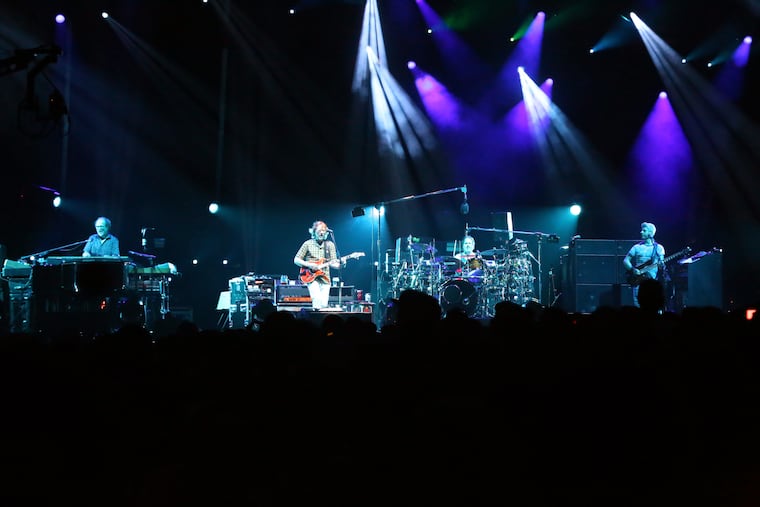
Just one song into their nearly 2½-hour set on Friday night, bassist and frontman Geddy Lee stepped to the mic to take care of some business. “Before we move along, there’s something about this city that I need to pay tribute to,” he told the sold-out Xfinity Mobile Arena, proceeding to dedicate “The Spirit of Radio” to the late Pierre Robert, the beloved WMMR host who died last year.
The heartfelt encomium was in keeping with the tone of the evening, far more bittersweet than your usual triumphant comeback. The band last appeared on the same stage in 2015, when the venue was still known as the Wells Fargo Center, its lengthy absence owing to the loss of drummer Neil Peart from brain cancer in 2020.
The “Fifty Something” Tour, which makes its second stop at the arena on Sunday, was framed as a tribute to the revered drummer and lyricist as much as a celebration of the band’s history. Introducing “Freewill,” from 1980’s Permanent Waves, Lee spoke about the philosophical nature of many of Peart’s lyrics, choking up as he mentioned the topics of “loss, recovery from loss, and love.”
This Canadian wake was decidedly of the raucous Irish variety, though, as the poignant videos and heartfelt dedications proved to be brief interludes amid an overwhelming sense of joy.
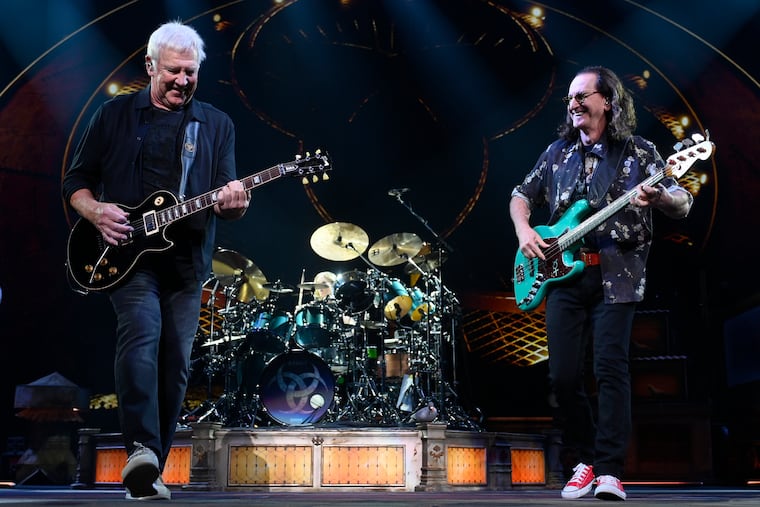
The 70-somethings Lee and guitarist Alex Lifeson are lifelong friends, and their playful interactions often feel like they are reverting to childhood, albeit at the same time pulling off the musical equivalent of higher mathematics. Lee skipped and leaped across the stage with giddy youthfulness, laughing and sneaking behind Lifeson for mid-song bouts of hide-and-seek.
The bassist was downright giddy following the band’s daunting 1978 instrumental “La Villa Strangiato.”
“Man, that’s a boatload of fun,” he gushed.
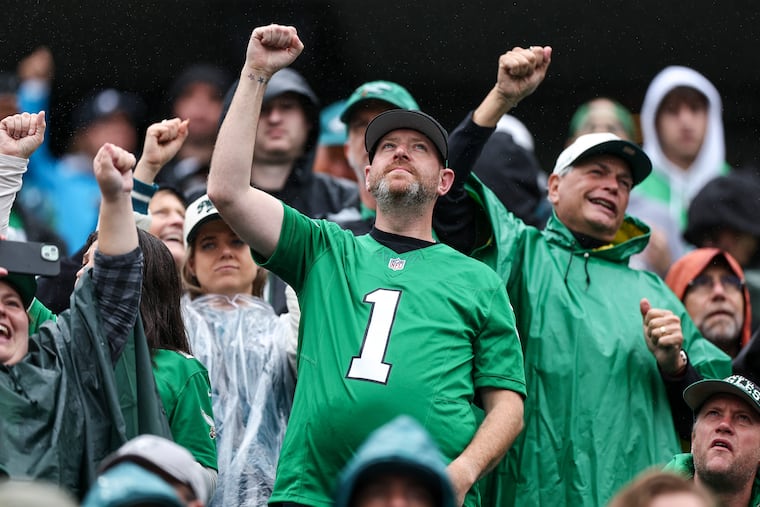
Rush’s return to performing after more than a decade was clearly a source of rabid anticipation for the Philly faithful, the vast majority of whom had shrugged off the usual taboo about wearing the T-shirt of the band they had come to see.
But the band, almost as well-known for its offbeat sense of humor as for its complex time signatures, decided that if one of the most dedicated fan bases in rock could wait 11 years, they could wait just a bit longer.
When the lights went down, the crowd’s ovation was answered by a six-minute video in which the septuagenarian rockers mocked their own longevity.
Following a Citizen Kane-inspired crane into a foreboding retirement community (“The Villas of Strangiato,” naturally), the camera follows a Wonka-like trio of curiosity seekers on a quest to find Rush. Along the way they find Lee and Lifeson in outlandish costumes and silly accents as, respectively, a “slightly used sausage” vendor and a doughnut-hoarding ex-general, and transformed into a pair of animated blackbirds a la Dumbo; the South Park kids as “Lil’ Rush”; and Jason Segal and Paul Rudd reprising their roles from I Love You, Man.
Finally the seekers discover a pair of magical robes (don’t ask), opening a portal that travels through half a century of Rush history to unveil a steampunk rooftop set and the band itself, Lee and Lifeson both spryly wielding double-necked axes and kicking off not with one of their classic rock staples but with 1977’s 11-minute epic “Xanadu.”
Did I call the fan base “dedicated”?
True enough, but it would be at least as accurate to use words like demanding and persnickety about an audience that likes its arena rock intricate and exacting.
Lee and Lifeson arrived with decades’ worth of nostalgia-tinged goodwill behind them, meaning that the skeptics’ eyes were trained almost exclusively on the drum chair, populated for the first time by the 43-year old German YouTube phenomenon Anika Nilles.
Stepping behind the drum kit of the late Neil Peart has to be one of the most thankless gigs in all of rock, but Nilles executed it thrillingly. Peart’s unique alchemy was his ability to pair his mind-boggling precision and intricacy with ebullient, almost vocal cadence.
Nilles brought her own personality to that blend while knowing — and nailing — those iconic barrages that every fan in the place expected to hear. It was well appreciated, with the crowd roaring louder at certain drum fills in “Tom Sawyer” or “YYZ” than they did for some of their favorite singalong choruses.
For their part, the veteran members didn’t need the goodwill.
Lee was in strong voice all evening, soaring to vibrant highs on “Freewill” or “Closer to the Heart.” Instrumentally, he and Lifeson retain their exuberant virtuosity. They navigated the labyrinths of “YYZ” or the multipart, 20-minute epic “2112,” which opened the second set in its entirety, with the fervor of a teenage garage band paired with the exactitude of lab technicians.
The musical acrobatics were obvious high points, but the concert was equally memorable for its emotional standouts — the band pouring its hearts into “The Garden,” a relatively obscure choice from its final album, 2012’s Clockwork Angels; or the highway-speed abandon and wistfulness emanating from an exhilarating “Red Barchetta.”
Rush went back to the beginning for its two-song encore, both dating back to its self-titled 1974 debut. “Finding My Way” was the show’s purest rock and roll song, while “Working Man” acknowledged original drummer John Rutsey, who died in 2008.
One last bit of mourning, one last moment of life-affirming euphoria.
Rush performs on its “Fifty Something” tour again Sunday, Aug. 23, 7:30 p.m., at Xfinity Mobile Arena.