Pollution spikes after Trump halted global air-monitoring efforts, report says
Air pollution in dozens of cities around the world rose after U.S. embassies and consulates stopped monitoring air quality readings last year, according to a study published Monday.
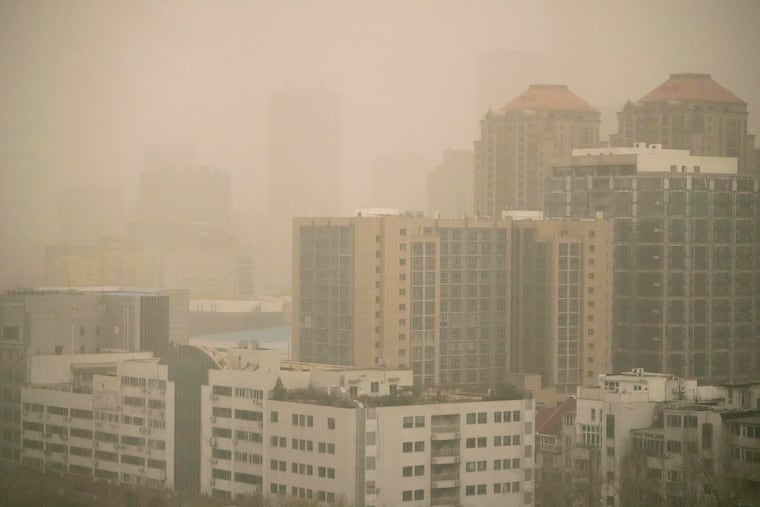
Air pollution in dozens of cities around the world rose after U.S. embassies and consulates stopped monitoring air quality readings last year, according to a study published Monday.
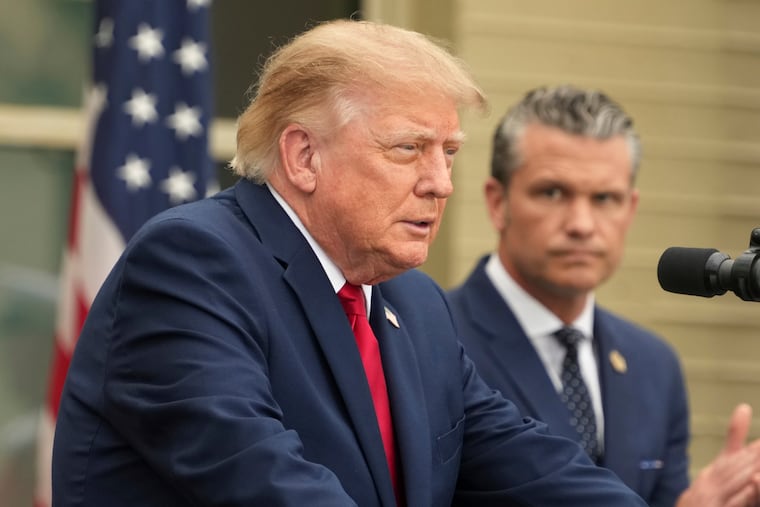
The Trump administration halted the program that published independent air quality data at more than 80 U.S. diplomatic sites in March 2025, citing budget constraints.
Later that year, local air pollution levels increased by between 24% and 33% in 46 of those cities, according to Monday’s study, published in the Proceedings of the National Academy of Sciences.
“This is such a big loss,” said Zoey Zhou, an assistant professor of climate at Columbia University and one of the study’s authors. “Not only for the data, but also for the health impacts and also for accountability.”
The State Department’s program had been linked in a previous study to lower air pollution levels in the cities where it was active. Its pullback came amid other moves the administration has made to curtail climate change research and regulations on air quality. The Environmental Protection Agency repealed limits on greenhouse gas emissions for coal and natural gas power plants on Monday.
The State Department did not respond to a request for comment on the recent findings and on whether the monitoring program will resume.
The program originated in 2008 when the U.S. Embassy in Beijing began to share air quality information from a monitor installed on its roof. The readings, which sometimes topped the Chinese government’s reported levels, drew local anger and pressured Chinese officials to act.
A 2022 study of 50 cities where U.S. embassies began monitoring air quality found that it led to significantly lower air pollution and increased local Google searches for terms like “air quality.”
“The US Embassy monitoring program provided high quality and credible information to the public about the state of their air, often where there were no other sources of such information,” Andrea La Nauze, an associate professor of economics at Deakin University in Australia and one of the authors of the 2022 study, wrote to the Washington Post. (La Nauze was not involved in the most recent report.)
Experts said the monitoring was valuable in cities and countries where local governments did not provide air quality information or offered inaccurate reports.
“This has been very valuable to the citizens of those countries to be able to understand what are the levels of air pollution, and how much trust should they place in the numbers that are published by the national government or by the city or region,” said Kristie Ebi, a professor at the Center for Health and the Global Environment at the University of Washington. “And that has been useful then for people to take action.”
Monday’s study investigated whether air quality gains would continue when that information disappeared, the authors wrote. They used satellite imagery to estimate air pollution levels in 46 cities where U.S. embassies and consulates halted monitoring in March 2025.
By September that year, the aerosol optical depth — a measure of particles in the air derived from satellite imagery that is correlated with levels of PM 2.5, pollutants small enough to enter the bloodstream — around those cities had increased by about 33%. By November 2025, pollution levels had decreased but were still around 24% higher than before monitoring stopped.
A 33% increase in aerosol optical depth corresponds to an increase of about 2 micrograms per cubic meter of PM 2.5, according to the study. The World Health Organization’s global air quality guidelines recommend that average PM 2.5 levels not exceed 5 micrograms per cubic meter each year.
Grouped by region, the largest average increases in aerosol optical depth appeared at sites in Southeast Asia, sub-Saharan Africa, and South Asia, according to Zhou, the study co-author. She cautioned that the number of sites in each region was small and that the study was not designed to isolate particular countries or cities, where readings could have been affected by other local factors.
Zhou wrote that the reduction in air pollution between September and November 2025 could suggest that other sources of air pollution information gradually filled the gap after U.S. embassies stopped their monitoring. But she said the pullback by American diplomatic missions, which issued highly visible and trusted air quality reports, was still a large loss.
Zhou added that her study did not perform a full cost-benefit analysis of the air quality monitoring program for the U.S. embassies involved.
Ebi of the University of Washington, who was not involved in the new study, said that the U.S. embassies’ data was also invaluable to researchers investigating other climate trends affected by air pollution, such as the spread of wildfire smoke and heat waves.
“As a scientist, I don’t understand why there is such a strong focus on removing information,” Ebi said. “Of moving to a situation where people are more ignorant, less knowledgeable about the harms they may be facing … and what actions to take to help reduce those harms.”