Trump administration proposes $103,000 fee for H-1B visas after legal setback
The administration estimates the new proposed regulation would generate an estimated $8.8 billion annually. Revenue would be used to run the immigration system.
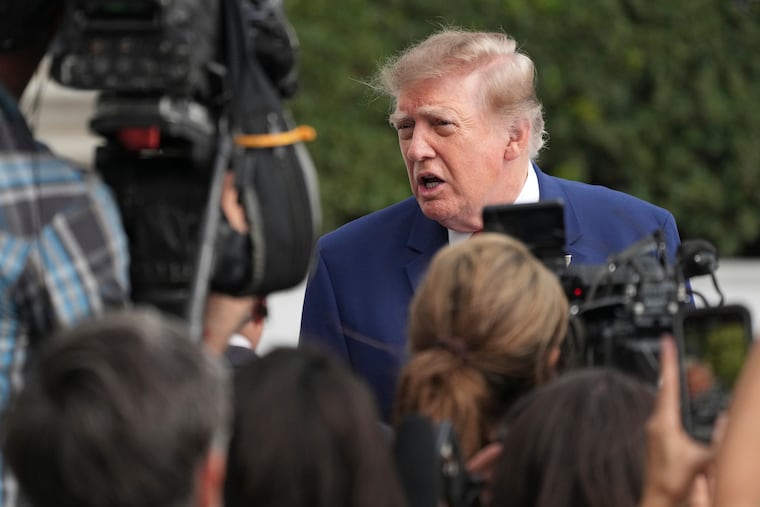
The Trump administration plans to charge employers seeking skilled foreign workers through the H-1B visa program a $103,265 fee, a proposed regulation posted on Monday says.
Revenue from the fee would be used to run the legal immigration system, the document says, including funding for federal immigration courts and U.S. Immigration and Customs Enforcement.
President Donald Trump’s administration argues that the H-1B program has been used to take jobs away from Americans and that the current system fails to prioritize the most exceptional foreign workers. Trump tried to implement a similar $100,000 fee last year through a presidential proclamation, but it was invalidated by a federal judge in June.
The H-1B program, created by Congress in 1990, provides employers with visas for 65,000 skilled foreign workers annually, with another 20,000 visas available for workers with advanced degrees from U.S. universities.
The proposed regulation contends the new fee would make employers “less likely to hire an H-1B worker over a qualified and highly-skilled American.” The regulation cites a working paper in the National Bureau of Economic Research that found H-1B workers made, on average, about 15% less than American counterparts.
In the June ruling against the fee, U.S. District Judge Leo T. Sorokin of Massachusetts said the president unilaterally imposed an illegal tax, bypassing Congress, and failed to consider the impact of his actions on sectors experiencing labor shortages that rely on the H-1B program to hire physicians, nurses, and teachers.
The Trump administration appealed the ruling to the U.S. Court of Appeals for the 1st Circuit and requested it be paused pending the appeal, but the request was denied in late July.
The new proposed regulation, which was set to formally publish in the Federal Register on Tuesday, seeks to carve a different legal path by proposing to use the fees to offset the cost of running the immigration system. It exempts some groups, such as most U.S. colleges, universities, and nonprofit hospitals affiliated with academic institutions. But unlike last year’s proposal, it would apply to many people who already reside in the United States, not just those submitting petitions from abroad.
“This makes it much broader,” said Jeremy Neufeld, director of immigration policy at the Institute for Progress, a nonpartisan think tank.
The proposed rule would restrict a major pathway for foreign guest workers that is widely used by Silicon Valley tech companies, among other businesses. Industry critics say that the fee would diminish the United States’ competitive edge against China, India, and other countries in a variety of research and tech industries, as well as harm a number of industries that depend on foreign professionals.
“This is again an illegal tax,” said Charles Kuck, who practices immigration law in Atlanta.
Amazon has received the most H-1B visas in recent years, with more than 9,300 approved petitions in fiscal year 2026 through June 30, according to U.S. Citizenship and Immigration Services data.
Other top users of the H-1B program in 2026 have been India-based IT and outsourcing companies Tata Consultancy Services and Infosys, followed by American tech companies Apple and Microsoft.
Neufeld said expanding the fee requirement to applicants already in the United States could lead to a significant reduction in the number of H-1B petitions that companies request.
“I would be very surprised if even large companies pay this fee for many of their H-1Bs,” he said.
Sorokin’s decision to strike down Trump’s original $100,000 H-1B visa fee came in response to a lawsuit from 20 states, led by California and Massachusetts.
The U.S. Chamber of Commerce and an association of top research universities in a separate lawsuit last year criticized Trump’s earlier fee, saying H-1B workers fill critical jobs in the medical, manufacturing, and technology fields.
The federal judge in that case sided with the Trump administration in December, leading the Chamber of Commerce and university association to appeal.
The administration estimates the new proposed regulation would generate an estimated $8.8 billion annually.
Nearly $3 billion would go to the federal immigration courts and be used to support more than 8,400 hires, including immigration court judges.
ICE, already funded to historic levels, would receive roughly $1 billion to pay for vetting of immigration applications and the administration of the student visa program, the proposed regulation says.
It says U.S. Citizenship and Immigration Services would use the money to offset $3 billion in existing costs, and several other agencies involved in immigration processing would also receive funds.
The public will have 30 days to comment on the new proposed regulation following its publication to the Federal Register on Tuesday, the proposal says. It can take months or even years to finalize regulations.
U.S. Citizenship and Immigration Services generally does not refund filing fees, including when a visa petition is denied. The proposed regulation does not address whether the new $103,265 fee would be refundable, and the agency did not respond to a request for comment.