In the American prairie, a stealth plan to end the GOP Senate majority
Indie candidates in states like South Dakota, Nebraska, and Idaho, where the Democratic brand is trash, might be the path to an anti-Trump Senate.
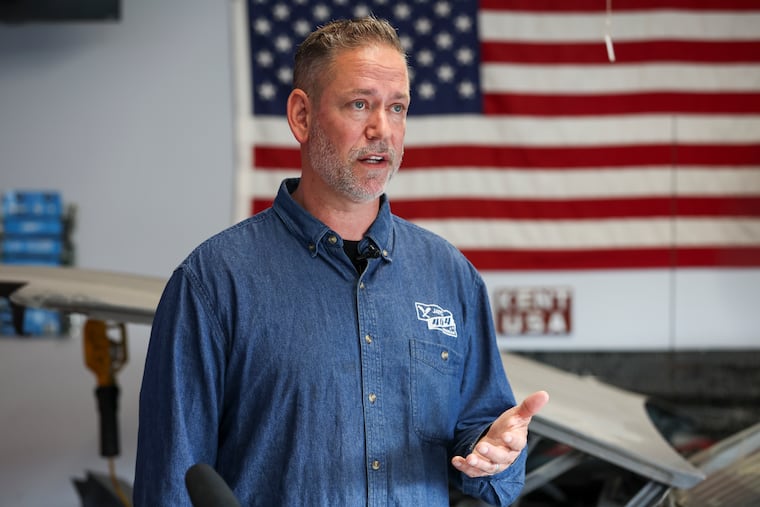
South Dakota is a prairie state that voted more than 63% for Donald Trump in 2024, so it’s not the first place you’d look to find a wave of discontent over GOP rule. But deep under the state’s expansive corn and soybean fields grow the invasive roots of political rage.
There’s the trade war that’s dried up demand for farmers’ crops while driving up the costs of essential items like fertilizer. Disdain for Trump has slashed the flow of Canadian tourists who once flocked to Mount Rushmore. There’s the same high gas and supermarket prices as in the other 49 states. And farmers who had liked the president’s border policies are now scared of losing workers to immigration raids.
Doug Sombke, president of the South Dakota Farmers Union, recently told the Canadian magazine Maclean’s that some Dakotans now “see we got sold a bill of goods … They were told grocery prices were going to come down. Trump keeps leading them on, saying, ‘There’s gonna be some pain.’ I don’t think anybody was ready for this much pain, this soon.”
In this brutal climate, one South Dakotan who probably should be bracing for pain is the mostly pro-Trump GOP Sen. Mike Rounds, a former governor seeking reelection to the Senate in November. And on Tuesday, Democrats hoping to oust Rounds from Capitol Hill got the big news that a lot of them were hoping for.
The only Democratic candidate dropped out of the race.
Huh?
That’s right. In what may be the most counterintuitive political strategy in U.S. political history, liberal anti-Trump activists in politically red states west of the Mississippi have been pleading for obscure, long-shot Democratic candidates to abandon their races — so that spunky independent candidates can challenge the GOP one-on-one instead.
When ex-state trooper and longtime Democratic activist Julian Beaudion told South Dakotans that, feeling pressure, he’s quitting the race, it cleared the path for independent Brian Bengs to consolidate the anti-incumbent vote in November. Polls suggest that the retired U.S. Air Force lawyer and college professor who was briefly a Democrat is already within striking distance of an upset.
And he’s not alone. Democrats are also not running a Senate candidate in Nebraska — where a well-funded and well-known independent, labor leader Dan Osborn, is running again — or in Idaho, where Todd Achilles, a one-time Democratic lawmaker who left the party, is on the ballot. In Montana, an independent Senate hopeful is also hoping that a Democrat will drop out, but unsuccessfully so far.
Casual political observers probably know that Democrats (and two allied independents) — currently in the Senate minority by a 47-53 count — are hoping Trump’s unpopularity will help their candidates run the table in five to six key contested states from Maine to Texas. But much less attention has been paid to this stealth backup plan — the notion that a few prairie populists can end the GOP majority.
What’s truly remarkable about this scheme is that a growing number of Democratic strategists are making a tacit, not to mention uncomfortable, acknowledgment: In the American heartland, their party’s brand is in the toilet.
That’s why a number of political activists believe the only way in these blood-red states to make the most out of rising voter anger against Republicans over high gas prices and Trump’s badly botched war with Iran is to offer voters an alternative without a “D” next to their name.
Steve Hildebrand, a Sioux Falls-based political consultant who was a high-ranking official in Barack Obama’s 2008 campaign, is one of the Democrats who thinks that — despite voter unrest against the GOP — an independent has the best chance in South Dakota.
“I think our party has gravitated too far away from fighting for hard-working Americans — you know, blue-collar workers, union workers,” Hildebrand told me this week. “You know, we’ve been fairly pathetic about a unified party message, and frankly, we’ve been pathetic about beating back on Donald Trump.”
Still, most of the political agenda of the western independents is larded with a modern brand of prairie populism that feels like a first cousin to the left-wing progressivism of Democrats — like Michigan’s Abdul El-Sayed — who’ve been scoring 2026 victories in blue states. They are strongly against billionaire influence in politics while advocating for healthcare reform and progressive ideas about making life more affordable.
“Getting money out of politics to the maximum extent possible would be the single biggest accomplishment I think of my career and of Congress,” Bengs told Independent Voter News. “And I’d also like to get healthcare affordable, so people don’t have to worry about, ‘Don’t call the ambulance, because I can’t afford that.’”
So why not run as a Democrat, when so many of his proposals overlap? Bengs did join the Democratic Party to challenge South Dakota’s other GOP senator, Majority Leader John Thune, in 2022, and after losing by 27 percentage points, he said he’ll never do that again.
He said at county fairs and parades he met voters who liked his ideas, but told him, “I’ll never vote for a Democrat.” “Sometimes there was an expletive in there. The takeaway was that the letter was more important than what I was saying.”
“Democrats are simply not competitive in at least 20 states, maybe more.” Larry Sabato, the University of Virginia political scientist and veteran analyst, told me. He said independent races can be a way to win in these red states, but the candidate needs to break with the Democrats on some issues and show themselves as a true outsider.
Sabato said Republican dominance of prairie and mountain states can end up with “voters getting fed up with the ruling party, and desiring a switch so badly that they’ll hold their nose and defect. I suppose it is easier to vote for an independent.”
Except that clearing the political field to create the desired one-on-one race between a Republican and such an independent upstart is proving to be not so easy.
» READ MORE: The other Graham Platner crisis for Dems | Will Bunch Newsletter
Experts like Sabato say the strongest independent Senate candidate might be Montana’s Seth Bodnar, a former University of Montana president and Army veteran. But the Democrat who’s on the ballot in Big Sky Country, Alani Bankhead, told Politico last week that she would abandon the race only “if a lightning bolt from God struck me” — an unlikely event even in this summer of wild weather. Polls suggest the Republican, Kurt Alme, would easily win a three-way race against both Bodnar and Bankhead.
The process in South Dakota was just as messy. The Democrat, Beaudion, also had been insistent he would not withdraw before Tuesday’s deadline, when he alleged that he and his family faced “intimidating threats to drop out of the race,” and gave no indication he would support Bengs’ campaign.
The best chance for knocking off a GOP incumbent remains Nebraska. Osborn, who rose to prominence as the union leader of a high-profile strike against the food giant Kellogg’s, got nearly 47% of the vote against Sen. Deb Fischer in 2024 when Trump was on the ballot. In 2026, he’s poised to capitalize on the president’s fading approval as he challenges another incumbent, Sen. Pete Ricketts.
“If you believe that billionaires, like Elon Musk, George Soros, or Pete Ricketts, should not be allowed to buy anything they want, including private islands for sex trafficking, and our elections, and our votes, then send them a message in cash and vote for me,” Osborn told a recent town hall. The most current poll, conducted in May by Tavern Associates, showed Osborn winning by 5 percentage points.
Still, it’s an uphill climb for many of these prairie independents. Incumbents like Rounds, Ricketts, and Idaho’s 83-year-old Sen. James Risch enter their races with an unshakeable base of MAGA Trump supporters, and they’ll have millions of dollars for ad campaigns that will surely portray their opponents as liberal Democratic wolves in sheep’s clothing.
There are also a ton of questions about what will happen if any of them win in November. Would they join the two current independents, Vermont Sen. Bernie Sanders and Maine Sen. Angus King, in caucusing with the Democrats? (Osborn has explicitly said he will not.) Whom would they support for majority leader, with a likely challenge to the current top Democrat Chuck Schumer? Would they vote mostly with Democrats, or take contrary, libertarian stands on issues like gun control, in line with voters back home?
The biggest question for Democrats, however, might be the long-term one: How will yanking so many candidates in 2026 help the professed goal of rebuilding a Democratic Party that some day will be viable in all 50 states? That will have to wait until the political derecho of disgust with both parties blows past.
“There’s just a lot of different stripes out there right now, and I don’t think that’s a bad thing,” Hildebrand said. “I think the Democratic Party and the Republican Party both have terrible brands. I think you know that it’s their own fault. It’s not the fault of voters.”

Sign up for the Will Bunch Newsletter