Letters to the Editor | Aug. 19, 2026
Inquirer readers on new medians for South Broad Street, e-bike safety, and questionable travel expenses by school officials in Montgomery County.
AveArts 2.0
Alan Greenberger and Harris M. Steinberg are two of Philadelphia’s most respected voices on planning and the public realm. That’s why I was surprised by how narrowly they framed AveArts 2.0.
We agree that South Broad Street is one of Philadelphia’s great civic spaces, with potential still unrealized.
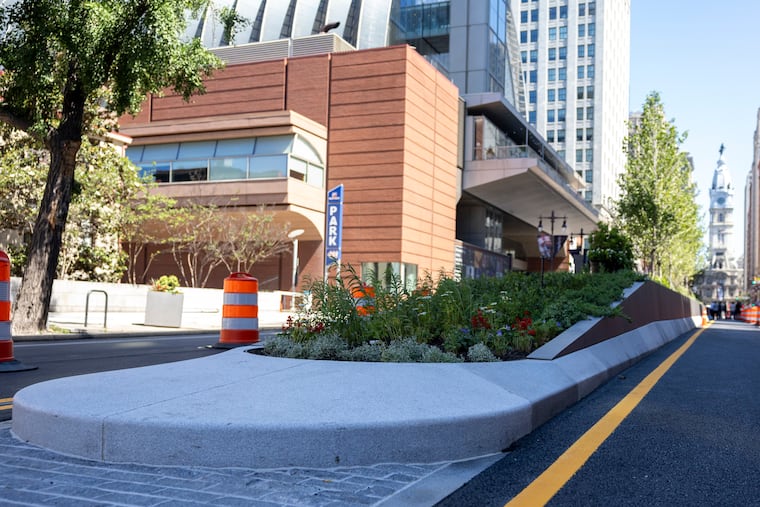
We disagree on the new median. They suggest it reinforces Broad Street’s highway feel. I see the opposite. Six lanes of traffic were already there. The median breaks up the noise and asphalt, making a street dominated by automobiles more welcoming to people.
Is every decision perfect? Of course not. That’s why we are building a beta block: to gather data, learn what works, and let that inform the next nine blocks rather than relying on opinion alone.
Landscaping won’t create street life. People do. Future phases will focus on sidewalks and places to gather and linger.
Philadelphia knows how to debate. But debate doesn’t get things built. The hard part is raising money, solving problems, bringing people together, and sticking with a big idea long enough to make it real.
So, Alan and Harris, join us.
Broad Street began as an audacious idea. Together, let’s do the hard work to finish it.
Carl Dranoff, board chair, Avenue of the Arts Inc., founder and CEO, Dranoff Properties
. . .
Alan Greenberger and Harris M. Steinberg’s condemnation of the new Broad Street median seems remarkably premature.
My wife and I live two blocks away and walk this stretch regularly. We knew the old median well. No one was lingering, strolling, or dining there. Today, a ribbon of trees and greenery has replaced it. To our eyes, it creates a view rather than destroying one, and has already made this heavily trafficked block feel more humane.
More importantly, the median is only the first part of the project. The next phase will expand the pedestrian realm along the sidewalks, adding landscaping, seating, public art, and performance space — the very kind of street life the authors say Broad Street needs.
They may ultimately prove right that elements of the design should be changed. That’s the point of building a “beta block” before extending the concept up and down Broad Street. But calling for millions of dollars of completed work to be ripped out before the rest of the block has even been built seems less like thoughtful urban planning than a rush to judgment.
Give the trees — and the project — a chance to grow.
Pete Sparber, Philadelphia
Security at home
This weekend we learned of the invasion and assault of Central Synagogue in New York and the defacing of the Weitzman here in Philadelphia.
Pick your emotion. Anger, fear, frustration. But let’s be determined to do something rather than wallow in anguish. Let us take action. I call upon every police force to ramp up their protective response to houses of worship, both Jewish and Muslim — as we are both under assault. I call upon government bodies to make funding accessible to help secure our sites, harden them, and actively man them.
I call upon each of us to reach out in the following ways:
Call your legislators and demand action to support safety and security, and put their offices behind the efforts noted above. Contribute what you can in time and money to help our institutions do the important work of bringing our tradition safely to our communities.
Last but certainly not least: Show up, go to your synagogue, and be counted. It is an act of defiance in the face of hatred; it is a concrete way to be in a community supporting our institutions.
We cannot remain on the sidelines hoping someone will address the problems. That is our job. Now is the time to stand for what we believe in. We must not succumb to the fear that makes us cower in the shadows. Together we are stronger.
Rabbi David Levin, president, Board of Rabbis of Greater Philadelphia
A safer future
On my way home from the hospital, I held my breath as a child on an e-bike careened across an intersection, directly in the path of a car trying to beat a traffic light. As a pediatrician who has seen too many broken limbs and traumatic brain injuries from crashes like this, I ran through the mental checklist of what I could do to help. I exhaled only when I heard the boy’s laughter drifting down the street; he was alive and well.
The rise in fatal and serious crashes involving children on e-bikes is a public health priority. As The Inquirer recently reported, however, responsibility for improving safety cannot rest with parents alone — nor should grieving parents face criminal charges when their children are killed. Parents may purchase e-bikes, but they cannot control reckless drivers, inadequate bike infrastructure, or inconsistently regulated retailers.
Individual responsibility remains important. E-bike users should meet minimum age requirements, wear helmets, and follow speed limits, just as young drivers must follow rules when operating cars.
We need consistent regulations, safer infrastructure, and proactive safety education. Protecting children from preventable death and disability requires a shared responsibility among parents, riders, retailers, drivers, and policymakers.
Vongai Mlambo, Philadelphia
Grand safari?
The guilty elephant is in the room, not in Africa. Thanks to The Inquirer’s March exposé, the shameful conduct of some members of the Montgomery County intermediate unit board — who, since 2023, have expensed $40,000 in international trips, including a 14-day African safari — has been brought to the public’s attention. No laws may have been broken, but any sense of ethics appears to have been abandoned.
The intermediate unit serves Montgomery County children with physical, psychological, or intellectual disabilities. These are our children and our neighbors’ children. If the intermediate unit was sincerely interested in learning how economically distressed communities addressed the needs of these children, then it need not have traveled to Africa, but closer to economically distressed communities, such as Camden or East St. Louis, Ill.
Families seeking services know how precious the available resources are. From personal experience, we know that even our local district is constrained by its budget and may resist providing services. Often, it is only through the perseverance and persistence of parents or guardians that these children ultimately receive the support they deserve under the law. Many parents become discouraged and give up. Others attend meeting after meeting, often missing days of work in order to overcome denial of services.
Once the services are finally obtained, the professionals who provide them prove to be skilled and helpful. Their abilities make the judgment demonstrated by their board all the more troubling. The Inquirer reported that not every board member participated. Good for them. However, the safari takers, if honorable, should resign. How can we trust them with the future of our children? The board doesn’t need to travel to see elephants; the guilty elephant is right in their room. I’m grateful for the work of the investigative reporters at The Inquirer — they once again demonstrate why we need a strong, independent, local press.
Leon S. Malmud and Elsa C. Malmud, Rydal
Join the conversation: Send letters to letters@inquirer.com. Limit length to 150 words and include home address and day and evening phone number. Letters run in The Inquirer six days a week on the editorial pages and online.