Krasner misses a chance to send a message against violence on SEPTA | Shackamaxon
Plus: Center City welcomes events, and a new study finds that Philadelphia could benefit from eliminating the wage tax.
Welcome to Shackamaxon, a weekly politics column focused on what’s happening at City Hall and in Harrisburg. It is named for the place where the Lenape chiefs would meet to conduct the people’s business, which is now known as Penn Treaty Park.
This week’s edition questions a plea deal, looks at Center City’s efforts to bring back daytime foot traffic, and examines the legacy of the Philadelphia wage tax.
Deterrence desired
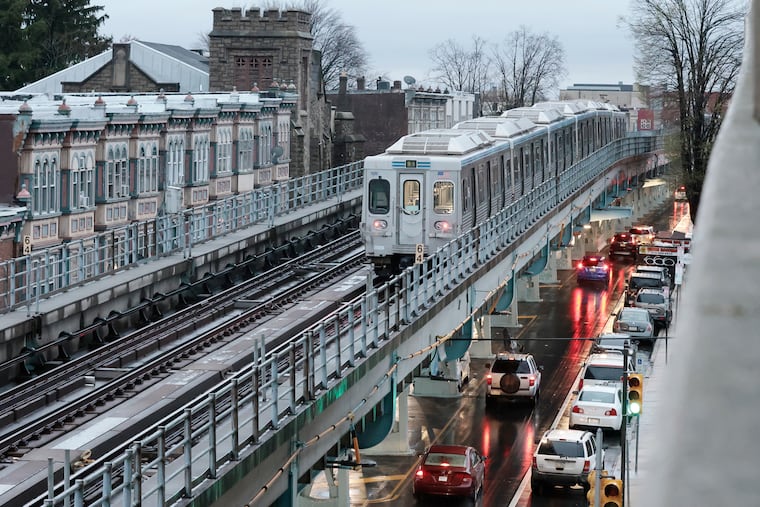
On Oct. 26, 2023, Bernard Gribbin became the first city transit operator to die by gunfire while on the job. Family members called him “the best of the best,” and described the 48-year-old Army veteran as a man who loved Philadelphia, who proudly took out-of-town relatives on tours of the city when they came to visit, and who served the public by working as a bus operator — a demanding, underpaid, and utterly essential job.
Gribbin’s murder sent shock waves through the city’s transit agency. His colleagues were left angry and afraid.
Around that time, reporting from Mensah Dean at the Trace identified a spate of attacks against public employees. During the next contract negotiations, the Transport Workers Union demanded SEPTA install bulletproof glass to protect drivers. Operators report that management, which has long emphasized de-escalation, became even more strict about the kinds of interactions bus drivers and train conductors are permitted to have with unruly passengers. For many, this undermined their sense of stewardship of their vehicles.
The death of Gribbin seemed like a case in which prosecutors could send a message that violence against SEPTA workers will be met with serious consequences. Instead, District Attorney Larry Krasner opted to accept a plea bargain.
Gribbin’s killer, Zhontay Capers, was able to secure a conviction for third-degree murder this week, rather than first, which was her original charge. Pennsylvania law defines first-degree murder as a willful, deliberate, and premeditated killing. Given Capers shot six times and that surveillance video showed her with a firearm shortly before the shooting, there would seem to be a strong case.
Of course, there could be complications I don’t know about. Perhaps another passenger was armed, a witness recanted, or Capers stood a good chance of being declared incompetent to stand trial. Prosecutors often accept plea deals in cases in which going to court presents too much risk.
Yet, Krasner’s office refused to comment on any of these possibilities when asked. Instead, they called it an example of individual justice. Capers now faces up to 40 years in prison, rather than a life sentence. Unlike Gribbin, she may one day again enjoy the unfettered company of friends and family.
Of course, individual justice is important. And if the circumstances of a particular case merit a third-degree charge, then so be it. But Krasner has not provided any additional information or shed any light on his office’s decision-making.
Every killing is a tragedy that deserves justice, but Gribbin’s death had a magnified impact. Capers’ actions also caused public servants to be fearful of coming into work, and resulted in millions of dollars’ worth of unplanned spending in installing the protective glass.
The public deserves a fuller account of why the plea deal happened.
Eventful days
Like most big city downtowns, Center City is a major employment hub. More than 300,000 people work there, representing around 42% of jobs in Philadelphia.
According to Clint Randall, the vice president for economic development at the Center City District, the amount of downtown office space has remained relatively stable for decades. That’s despite the rise of residential conversions and remote and hybrid work arrangements. Still, people are coming to the office less often, and momentum on bringing workers downtown on a more regular basis has stalled.
Thankfully, Randall and his colleagues have a plan to ensure the city’s commercial core remains as essential as it can be by leveraging its status as a regional host, with events seen as both a short- and long-term way to make Center City more vibrant.
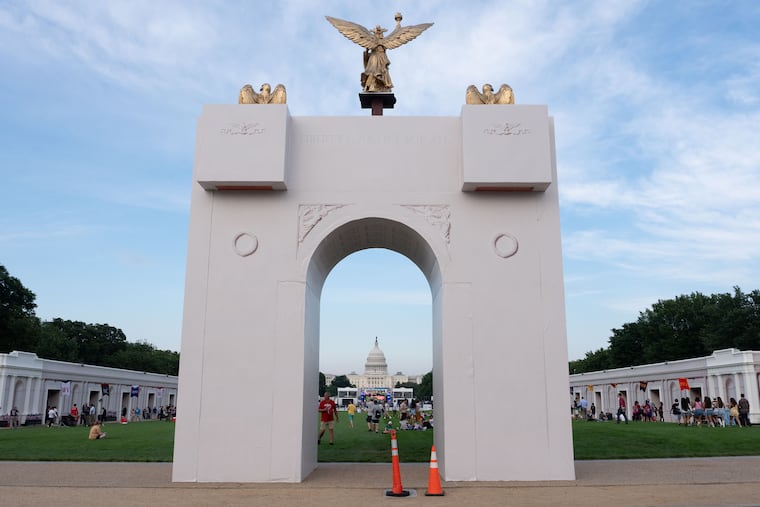
Randall cited Center City Sips as a way to bring more people into town on Wednesday evenings during the summer. Philadelphia Open Streets, the FIFA World Cup, festivities around the MLB All-Star Game, and other smaller events have proved a major boon. They’ve brought out not just those who live and work in Center City, but also people from around the region and the world who may not otherwise have had a reason to come.
I asked Randall about the potential for event fatigue among locals. With Center City adding thousands of new residents each year, would this create pressure to draw down on hosting? Randall said that vibrancy is what brings many people to live downtown in the first place. As inconvenient as it can be to live next to major festivals, it is also a major amenity.
My own experience bears this out. I may not have made it to the Eagles’ Super Bowl parades if they hadn’t marched down Broad Street, not far from my South Philly home. Our friends and family also enjoyed the convenience of having a place to sit down and use a nonportable restroom.
Tax switch
When Philadelphia became the first American city to institute a wage tax all the way back in 1940, the idea seemed like a no-brainer. After all, where else were people supposed to work? Suburban rail stations were packed to the brim with commuters, the Interstate Highway System did not yet exist, and anyone who wanted access to skilled workers had little choice but to open offices in Center City.
Today, however, the region looks different.
While Center City remains a major regional hub, Philadelphia has lost tens of thousands of jobs to suburban office parks. Most Delaware Valley residents drive themselves to work, and hundreds of thousands of people have moved to the suburbs. This has left us with an important policy question: How much of this shift is simply due to national cultural trends, and how much of it was caused by public policy?
A new study from René Livas and Matthew Jacob at Harvard University, working with the Progress and Poverty Institute, attempts to answer this question. They say there is a clear link.
As the wage tax rate rose between 1940 and 1976, jobs fled to the suburbs. Since City Hall began decreasing the tax in 1995, jobs have started to flow back into Philadelphia. In fact, the city recently overtook Montgomery County as the top host for office jobs in the region.
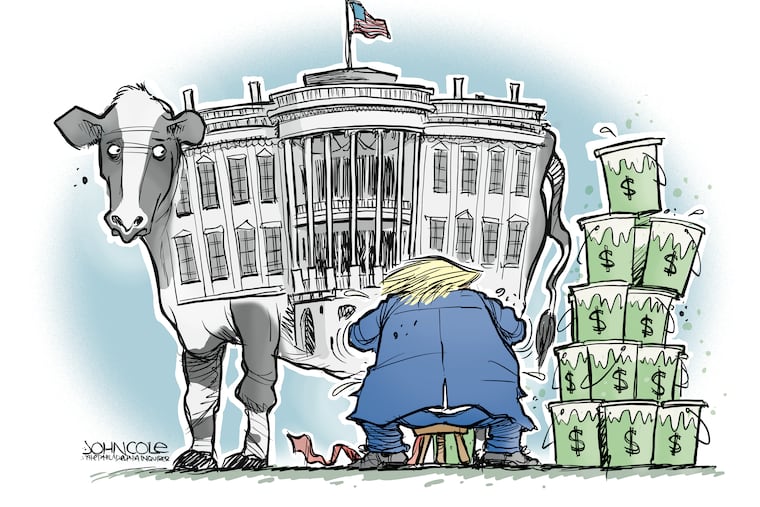
The researchers’ proposal for replacing the wage tax is based around switching to a land value tax, an idea that is popular among economists. Separate tax rates for land and property are already legal in Pennsylvania, and the city already splits the two in its own property assessments.
The idea, however, may be politically fraught. Homeowners already resent the chaos of the city’s regular assessments. Additionally, determining how much of a property’s value is inherent to its location may be easier said than done. While an 80/20 split between structural and land value is often cited as standard, levying the two individually would require significantly more research from the city’s Office of Property Assessment.
In an email, Livas suggested phasing in the switch, which would help avoid big increases. He also said that the city’s existing programs, like the homestead exemption and Longtime Owner Occupants Program, should help alleviate the burden on homeowners.
The data suggests the city could add around 26,000 jobs if this reform is pursued.