Doctors' groups defend tissue-cutting device under fire
Two doctors' groups are defending a tissue-cutting device that makes gynecological surgery less invasive but in rare cases spreads a hidden uterine cancer.
Two doctors' groups are defending a tissue-cutting device that makes gynecological surgery less invasive but in rare cases spreads a hidden uterine cancer.
Electric morcellators, introduced in 1993, are used to dissect the uterus or uterine fibroids so tissue can be removed through small abdominal incisions. They have come under scrutiny in recent months because the motorized blade can disseminate bits of undetected cancer.
Many hospitals have halted their use; the Food and Drug Administration last month issued a safety advisory "discouraging" power morcellation; and Johnson & Johnson suspended worldwide sales of its version of the machine.
The big question is whether the FDA will go further. In July, an FDA advisory panel will review power morcellation and offer guidance, although an official said, "It is premature to discuss potential action."
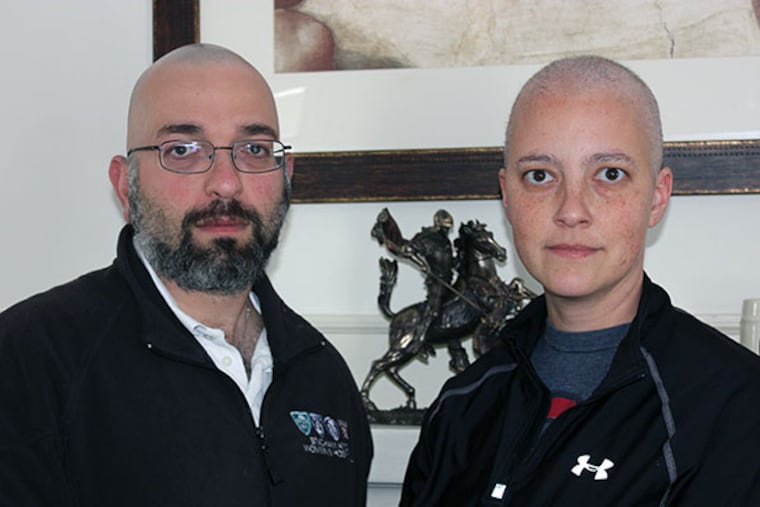
Hooman Noorchashm passionately disagrees. The cardiothoracic surgeon has crusaded for a ban since December, a month after the mother of their six children, anesthesiologist Amy Reed, 40, was found to have cancer. Fragments of leiomyosarcoma - a rare uterine malignancy that preoperative tests almost always miss - were hurled around her abdominal cavity during a hysterectomy at Brigham and Woman's Hospital in Boston, where he was a transplant surgeon.
Leiomyosarcoma is notoriously aggressive, but experts say spreading it can make a grim prognosis worse.
"The FDA is well within its legal jurisdiction and ethical obligation" to ban the devices, Noorchashm said.
Through a change.org petition, media coverage, and relentless pressure on regulators, lawmakers, and medical colleagues, Noorchashm and his wife have spotlighted a problem that gynecologists had barely recognized. Recent scientific reviews estimate the chance of morcellating an undetected leiomyosarcoma at one in 350 - about 10 times higher than doctors previously believed.
So far, about 120 morcellated leiomyosarcoma patients, or their survivors, have signed the change.org petition, Noorchashm said. (Law firms are lining up to file suits on behalf of families.)
The physicians who treat gynecological problems are unswayed.
This month, two key groups - the American College of Obstetricians and Gynecologists, and the AAGL, representing surgeons who use minimally invasive gynecologic procedures - issued statements saying power morcellation still has a valuable role in patient care.
About 400,000 hysterectomies are done annually in the United States; 11 percent involve power morcellation, according to the ob-gyns.
The groups' statements explain that uterine fibroids - the most common reason for hysterectomy - are often too large to be removed intact through the vagina or a small abdominal incision. With the ability to mechanically fragment and remove tissue through tiny incisions, physicians can spare women traditional abdominal surgery.
Open surgery increases pain, recovery time, and the risk of infection, bleeding, nerve injury, and dangerous blood clots.
"All existing methods of tissue extraction have risks and benefits, which must be balanced," the AAGL's statement says.
Both groups say using the morcellator within an "isolation bag" to contain the uterine tissue may help, but such systems pose technical problems. The groups advocate the creation of surgical registries to gather more data about power morcellation, and stress the importance of forewarning patients about the risks.
Noorchashm denounced the groups as "committing a historic and deadly act of medical and ethical negligence."
Federal regulations say the FDA can ban a device "that presents an unreasonable and substantial risk of illness or injury," but the agency rarely takes that drastic step. One example: The agency ordered silicone breast implants off the market in 1992 - but in 2006 began allowing the sale of improved versions.
Among the actions the advisory panel will consider in July is a prominent warning in the morcellator instructions. So-called black box warnings are fairly common on drugs, but studies show their effectiveness varies.
Noorchashm has criticized the current panel's composition - ob-gyns and an industry representative - as biased. An FDA spokeswoman said the agency "plans to consider inclusion of other medical areas as well."
"I hope they are capable of seeing what's at stake," Noorchashm said of the panel members. "It happens to be people's lives."
His wife - who underwent harrowing surgery and completed a course of intensive chemotherapy - is doing well, he said. Next month, she plans to go back to work part-time at Harvard's Beth Israel Deaconess Medical Center, although not for long. They are moving their family to Philadelphia, where both trained. He will start at Thomas Jefferson University Hospital as a cardiac surgeon in August.
"We're coming home," he said.
215-854-2720 @repopter