Pa. Supreme Court to decide whether ban on mandatory life terms for second-degree murder is retroactive
The case of Jerome Coffey, a Philadelphia man convicted of a 1992 murder and sentenced to life in prison, could decide whether more than a thousand other people get a chance at new sentences.
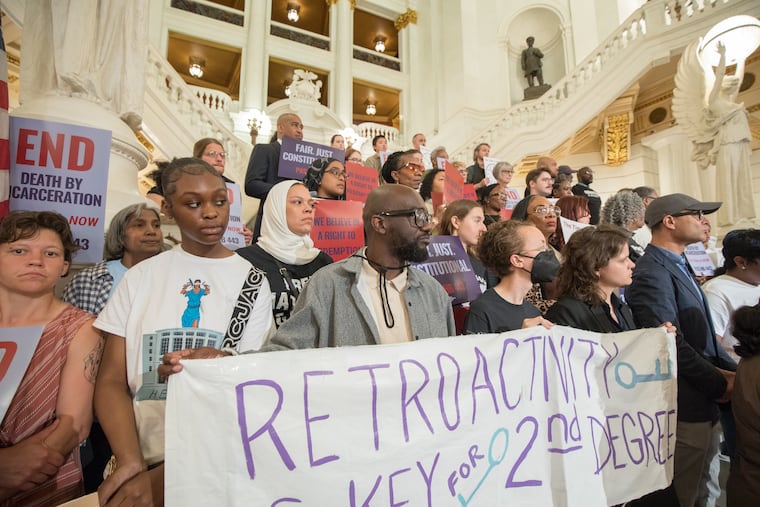
The Pennsylvania Supreme Court agreed Tuesday to decide whether its March ruling striking down automatic sentences of life without parole for second-degree murder applies to the people already serving them.
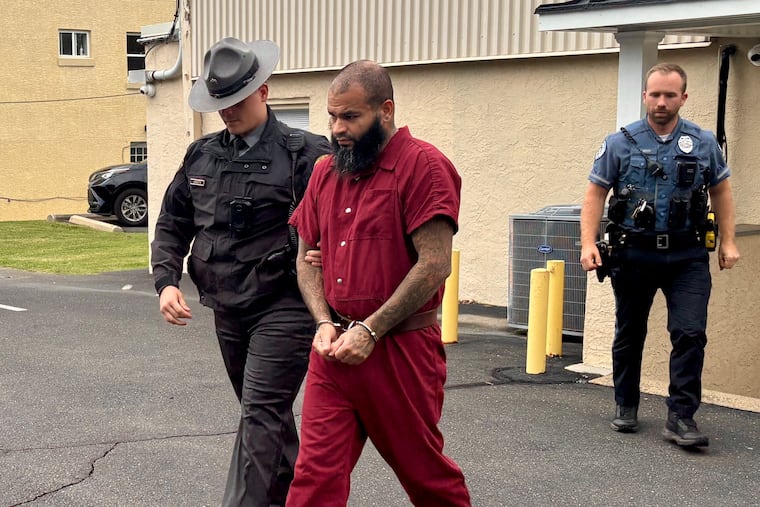
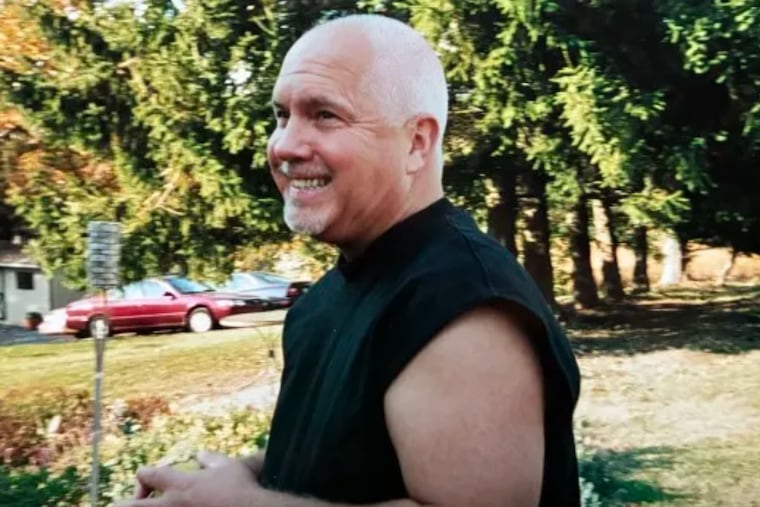
The high court will rule in the case of Jerome Coffey, a Philadelphia man convicted in a 1992 killing in which prosecutors said a group of men posing as law enforcement officers boxed in a man’s car and shot him.
The court’s decision will reach well beyond Coffey. It will settle whether roughly 1,100 people — including more than 500 convicted in Philadelphia — can ask judges for new sentences, or will remain bound by a punishment the state’s highest court has ruled unconstitutional.
In a unanimous decision in March, the justices said Pennsylvania’s mandatory life sentence for second-degree murder violates the state constitution’s ban on cruel punishments.
Second-degree murder covers killings committed during another felony — even when the defendant did not kill anyone. The high court held that judges must weigh a person’s individual role before imposing a punishment that lasts a lifetime.
But the high court did not say whether its ruling applied to people who had already been sentenced. Instead, it put the decision on hold for 120 days so the General Assembly could write a new sentencing law and, if lawmakers chose, decide the question of retroactivity themselves.
The legislature did neither, as measures introduced in both the Republican-controlled Senate and Democratic-controlled House failed to advance.
Tuesday’s order in Coffey’s case comes weeks after four other people serving life sentences asked the court to take up the same question.
Coffey was convicted in 1994 in the death of Johnny Moss two years earlier. According to court records, three men got out of two cars that had pinned Moss’ vehicle near 24th and Thompson Streets in North Philadelphia. One man shouted “task force” and pulled Moss from his car.
Moss was shot in the head. His brother, who was standing beside the car, was shot in the arm.
At trial, prosecutors said Coffey was the man who shouted “task force,” while Coffey’s mother and sister testified that he was at home that night. The jury convicted him of second-degree murder, conspiracy, and related crimes. It acquitted his codefendant, Lee Smith, of all charges.
No physical evidence tied Coffey to the killing, his lawyers have said, and a key prosecution witness recanted before trial. The lawyers also said prosecutors withheld evidence that could have helped Coffey’s, but state Superior Court rejected those contentions.
And on Tuesday, the state Supreme Court declined to review them, limiting the scope of his appeal to the sentencing question alone.
Even so, Bret Grote, the legal director of the Abolitionist Law Center, which represents Coffey, praised the court’s decision to hear the case.
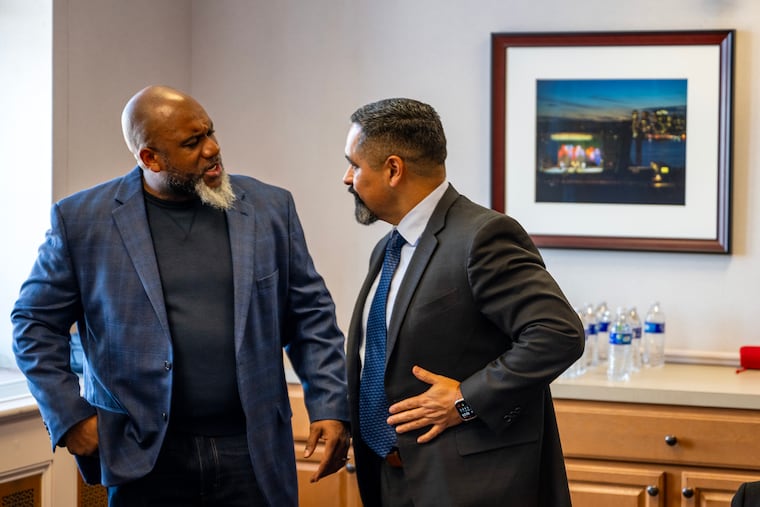
“This is what those who have been serving this sentence have been waiting for,” said Grote, who also represented Derek Lee, the Pittsburgh man whose appeal of his life sentence for his second-degree murder conviction led to the court’s decision in March.
Grote said Coffey, who founded the grassroots Human Rights Coalition from prison, will be “well able to demonstrate” why the decision “should apply to people like him who need to be home with us out here in our communities.”
Because Coffey’s case began in Philadelphia, the district attorney’s office will argue for the state in his appeal. In an interview Tuesday, District Attorney Larry Krasner reiterated his support for retroactivity, saying, “we cannot have a legal system where people sit in jail for the rest of their lives for an unconstitutional sentence.”
He added that “this office, consistent with its obligation to seek justice and uphold the Constitution, will support retroactivity” in Coffey’s case.
Prosecutors elsewhere have signaled resistance, however. In August, the Pennsylvania District Attorneys Association’s communications chair, Berks County District Attorney John Adams, said prosecutors would not concede that the high court’s ruling applies retroactively without a new sentencing law.
Coffey’s case is unlikely to be resolved quickly. And in the meantime, lawmakers could still act.
Some stakeholders have predicted that legislative agreement on how to handle such cases is more likely after the Nov. 3 elections. A law that applies to people already serving the sentence could make the court’s answer moot.
But if lawmakers don’t act, the outcome was always likely to land back with the high court, said Ben Lerner, a former Philadelphia Common Pleas Court judge and former chief defender.
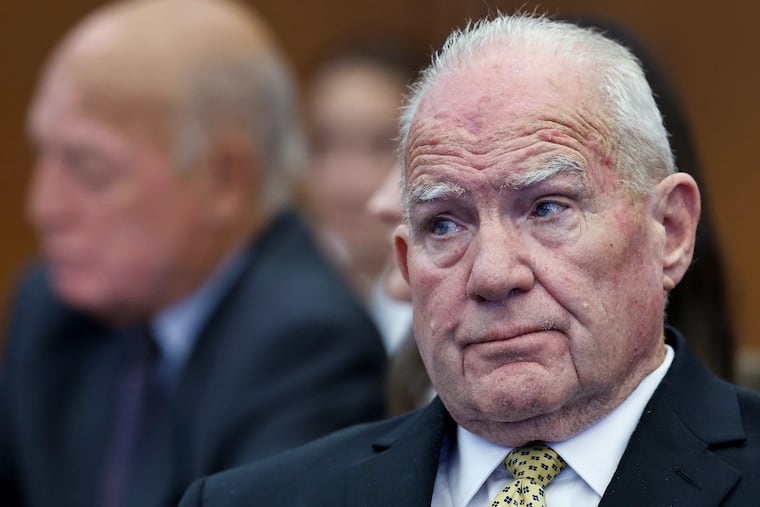
“I’m not surprised,” Lerner said Tuesday. The high court, he said, was always going to give the legislature “the first crack” at reforming the system. But if it failed, “the court was always going to have to step in and do what needs to be done.”
“It’s too important an issue,” he added. “Too basic a right.”