Redeemer Health filed for bankruptcy protection
The Montgomery County health system has reported operating losses every year since 2017.
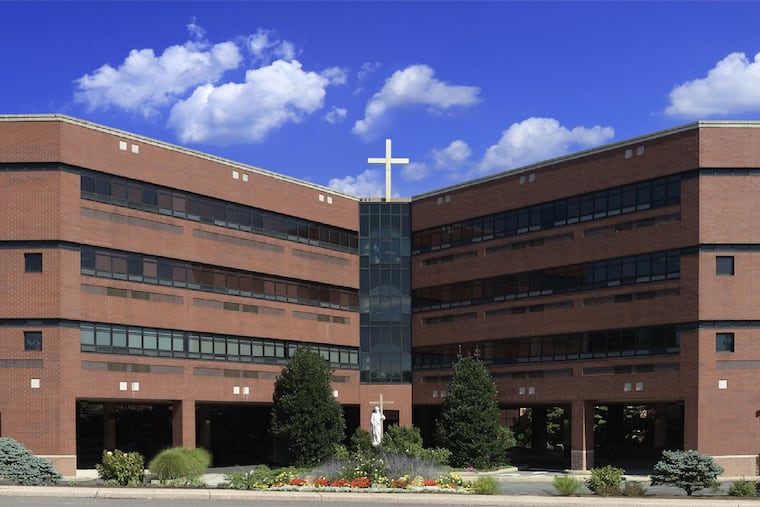
Redeemer Health filed for bankruptcy protection late Sunday after the nonprofit board of the Catholic system decided to sell or close its money-losing Montgomery County hospital.
No immediate impact is expected for patients and employees of its 239-bed hospital in Abington Township. Holy Redeemer Hospital is the last independently operated general hospital in the Philadelphia region, following decades of consolidation.
“Holy Redeemer Hospital is unable to compete effectively with larger hospital systems in the area, rendering its future operations as an independent hospital unsustainable,” Redeemer’s interim CEO Jim Logue said in a court filing.
The hospital and its physician network have recorded annual losses ranging from $31.6 million to $48.9 million during the last five years, with the year ended June 30 showing the biggest deficit, Logue said in his explanation of what led to the bankruptcy.
The system missed a debt payment in September and has fallen behind on vendor payments. A loss in fiscal 2026 means Redeemer has logged 10 straight years of operating losses.
Patients should keep their appointments, Logue said. As is common in such proceedings, Redeemer’s bankruptcy is not expected to immediately affect patient care, nor the livelihoods of more than 3,000 employees. There’s no way to predict at this point how soon the hospital’s fate will be known.
Redeemer also operates local retirement communities, nursing homes, and home health services. There’s strong demand for those services, but they “operate at thin margins and will require investment and marketing to strengthen their market share to best ensure sustained operations,” Logue said in the filing.
Looking for a buyer
Even before the filing Sunday in Philadelphia court, Redeemer officials were exploring options with other area health systems. “We are deeply encouraged by the support being offered by major health systems in our region,” Bill Sasso, chair of Redeemer’s board, said in a news release.
Sasso, chair emeritus of Stradley Ronon, a Philadelphia law firm, did not identify the health systems that have offered support, nor provide details on what the systems are considering.
A previous effort, launched in 2022, failed to find a buyer for the hospital in an area of wealthy Montgomery County that has plenty of healthcare options.
On Monday, The Inquirer contacted Jefferson Health, the University of Pennsylvania Health System, Temple University Health System, and Trinity Health for comment about their potential interest in Holy Redeemer. Penn and Jefferson had no comment. Temple and Trinity did not immediately respond.
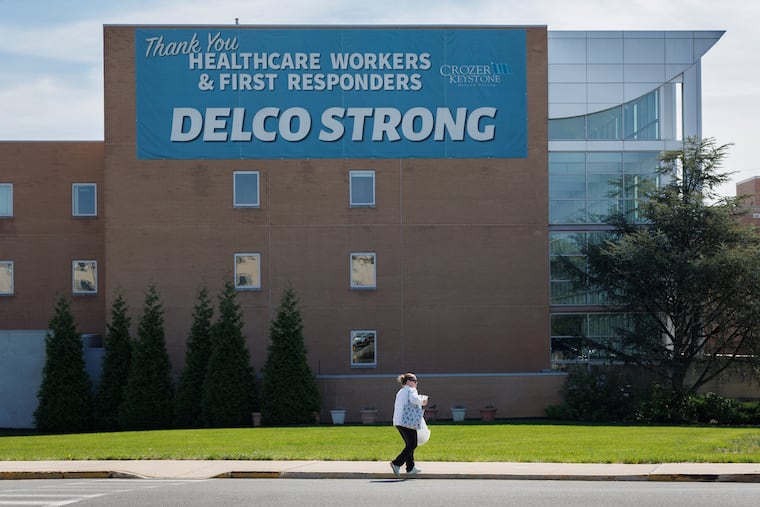
The availability of alternatives sets Redeemer apart from other Philadelphia-area hospital bankruptcies in recent years. The bankruptcies of Hahnemann University Hospital and St. Christopher’s Hospital for Children in 2019 and of Crozer Health last year affected underserved populations. Concern about losing needed safety-net care set off scrambles to find a way to save St. Chris, Hahnemann, and Crozer-Chester Medical Center. Only St. Chris remains in operation.
Logue noted that Holy Redeemer’s obstetrics and gynecology program has overseen more than 11,000 deliveries since 2021. The hospital has a neonatal intensive care unit in partnership with Children’s Hospital of Philadelphia.
An order of nuns from Germany, the Sisters of the Holy Redeemer, founded Holy Redeemer Hospital in the 1950s. In 2020, the nuns withdrew from their role as sponsors of the hospital after creating a new entity called Redeemer Ministries to ensure that the institution follows Catholic teachings.
Financial troubles in competitive market
Most hospital systems are under financial pressure from rising costs and resistance to higher reimbursement from government and employers. But Redeemer has the added challenge of stiff competition from Jefferson Health’s large hospital in Abington, just a few miles away.
Holy Redeemer is the only hospital in the Philadelphia region that is not part of a larger system, after the sales last year of Grand View Hospital to St. Luke’s University Health Network and Doylestown Hospital to the University of Pennsylvania Health System.
Its small scale made it difficult to achieve financial stability.
Redeemer’s latest financial report to bondholders showed a $29 million operating loss on $332 million in revenue in the nine months ended March 31. Financial documents included in the bankruptcy filing only go through April and showed a $34.6 million operating loss.
Redeemer has $119 million of long-term debt.
The health system notified bondholders Wednesday that its audited financial statements for the year ended June 30 was late. The lack of audited financial statements could make it difficult for potential buyers to evaluate the hospital.
Leadership in flux
Redeemer’s longtime CEO, Michael Laign retired in 2024 after three decades. The same year, Redeemer hired Chicago consulting firm Kaufman Hall to help devise a financial turnaround plan.
Laign’s replacement, Greg Wozniak, a former CEO of St. Mary Medical Center in Langhorne, resigned abruptly in September.
Logue, his successor, had been Redeemer’s chief transformation officer since Feb. 2025.
Now the system has hired Lawrence G. McMichael of Dilworth Paxson LLP to represent Redeemer in the bankruptcy and Scott Victor of SSG Capital Advisors to find a buyer for the hospital.
Editor’s note: This story has been updated with additional information and comment on the bankruptcy protection filing.