Trump isn’t done interfering with elections | Editorial
The president’s midterm strategy is less about winning votes than preventing them from being cast and counted.
A casual observer might believe Donald Trump when he says he doesn’t care about the coming midterm elections. Based on the historical record, the president’s basement-dwelling approval rating alone should dismay Republicans on Capitol Hill, and yet he is taking none of the usual steps to shore up his party’s prospects.
On the contrary, he has persisted in an unpopular and unsuccessful war, reinstituted inflationary tariffs, obsessed over a $600 million ballroom, and refused to sign one of the few substantive bills passed by the GOP-controlled Congress.
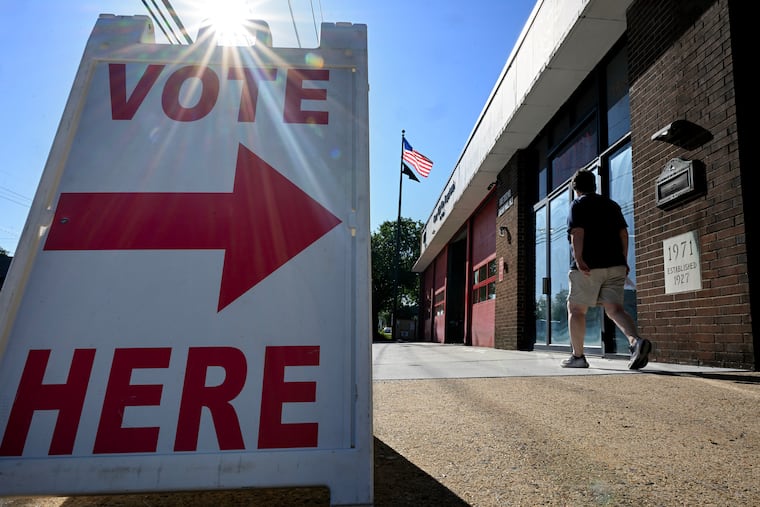
But Trump’s midterm strategy, like his broader political philosophy, is one of subtraction, not addition. Rather than persuade Americans to vote for his fellow Republicans, he prefers to stop people from voting against them. In terms of the effort to suppress rather than win votes, his campaign looks downright frenetic.
A key chokepoint of this block-the-vote strategy is the mail, controlled as it is by the federal government. Despite taking advantage of the convenience himself as recently as last spring, Trump has been menacing mailed ballots since his botched COVID-19 response helped dramatically boost remote voting. He continued to do so Monday, when his administration petitioned the Supreme Court to let the U.S. Postal Service assume the novel duty of not delivering mail, namely ballots that tend to favor Democrats.
At issue is his executive order directing the U.S. Department of Homeland Security to compile lists of citizens eligible to vote in each state, to be used by postal officials to interfere with the election. The Justice Department has demanded voter data from all the states under the order, leading to continuing legal disputes with many of them. Ruling on a lawsuit by Pennsylvania, New Jersey, and 20 other states in June, a federal court in Massachusetts blocked the order; recently, an appellate court agreed. As U.S. District Judge Indira Talwani noted persuasively, “the Constitution does not grant the president any specific powers over elections.”
» READ MORE: The way out of Trump’s failed Iran war | Editorial
Administration lawyers nevertheless filed an emergency appeal with the Supreme Court, and who can blame them for trying? The high court’s conservative majority has rescued Trump from accountability for the plot against the 2020 election, taken a jackhammer to the political independence of agencies such as the Postal Service, and enabled states to eliminate districts that are mostly made up of people of color, which tend to lean Democratic.
Last month, however, the court surprised many observers by narrowly upholding laws in Mississippi and many other states allowing ballots postmarked by Election Day to be counted even if they are delivered subsequently. Should a majority of the justices make another relatively rare decision to side with the Constitution over the president in the latest mail-in ballot case, the administration has other antidemocratic endeavors in the works.
Even if the Postal Service is prevented from actively targeting ballots, underfunding and consolidation of services could slow their postmarking and delivery to the point of ineligibility. Officials in California believe the agency’s glacial processing may have contributed to the disenfranchisement of nearly 150,000 voters in last spring’s primary election.
» READ MORE: Trump’s war on the media is really a war on the truth | Editorial
Trump has also been browbeating Republican senators for months over legislation known as the SAVE America Act, which would require a passport or birth certificate to vote — documents that tens of millions of Americans don’t have at hand. Trump has held up reauthorization of intelligence authorities, refused to sign bipartisan housing legislation, and demanded that the Senate kill the filibuster and cancel its August recess to pass the bill. Majority Leader John Thune’s consistent answer has been that Senate Republicans don’t — ironically enough — have the votes.
The administration can likely be counted on to resort to more jackbooted tactics as the election approaches. Trump has suggested he would be willing to send federal troops and agents to the polls to intimidate voters in violation of federal law. His record of using federal forces against Democratic-leaning states and cities is already extensive.
Even the successful completion of a free and fair election won’t necessarily be the end of Trump’s efforts to undermine it, as we learned when he tried to reverse a result at the expense of millions of voters in Pennsylvania and other battleground states six years ago. In his recent primetime address, the president was still harping on his 2020 loss — which his new national intelligence director just refused to acknowledge — while laying the groundwork for future interference.
These tactics failed then, however, and robust public participation and vigilance can ensure that they do so again. The administration’s conspiracy against the election shows Trump still fears the will of the people. He should.