Letters to the Editor | Aug. 14, 2026
Inquirer readers on the U.S. military’s shortage of critical munitions and the eyesore that is abandoned cars in Philadelphia.
Plutocracy
Two hundred and fifty years ago, our city’s favorite son, Ben Franklin, warned us that our country is a “republic, if you can keep it.” Sadly, it appears we are failing to heed his wise counsel. We are evolving into a plutocracy, defined as “a state or society governed by the wealthy.” Dark money has flooded and controlled the electoral process. A substantial majority of Americans want universal background checks for gun buyers after numerous mass shootings, yet all such reform efforts fail. A majority of Americans want a woman to have the right to have a choice in health matters, yet the U.S. Supreme Court says otherwise, and several states are criminalizing such conduct. A majority of us believe global warming is real as enhanced natural disasters continue unabated, yet governments ignore it and continue to denigrate the environment. A majority of Americans support scientific research and adequate funding for the National Institutes of Health and the Centers for Disease Control and Prevention, yet funds are being cut, scientists laid off, and Anthony Fauci was threatened with jail time. With unlimited campaign funds and sophisticated marketing injected into our political process, a simple majority no longer rules. We are slipping into a plutocracy in which tech billionaires, Elon Musk, Big Pharma, Big Oil, and other financial powerhouses are in control. Fortunately, the forthcoming midterm elections give us perhaps a last opportunity to live up to Franklin’s ideals. Let’s restore checks and balances come Nov. 3.
Angus Love, Narberth, anguslove76@gmail.com
Willful ignorance
I’m fascinated by the fact, as reported recently, that Donald Trump is angry at Pete Hegseth for keeping him “in the dark” about the dearth of munitions available to our military, which might hamper Trump’s ability to continue bombing Iran. I’m a retired teacher, and I knew about this “munitions problem” a long time ago. How can this be explained? Am I really intelligent? A genius? Or is the president of this country willfully ignorant? Or is he kept in a bubble? It reminds me of the time — a few days before Hurricane Katrina slammed into New Orleans — when I turned to my wife and said something to the effect of: “My God, this storm could literally obliterate New Orleans from the earth. The city is literally under sea level and this is a Category 5 storm!” and then hearing President George W. Bush, after the destruction, telling us that no one could have predicted the damage. Really? Do Republican presidents always have to be so dangerously obtuse? Do Republicans only vote for their own little “bubble boys?”
John McLaughlin, Philadelphia
Not to be outdone
Remember how we felt pre-COVID-19 when Phillies rightfielder Bryce Harper signed a 13-year, $330 million no-trade, no-opt-out-option contract in winter 2019? It seemed like a Phillies World Series championship guarantee.
Then, we were not disheartened by a narrow Super Bowl loss to the Kansas City Chiefs in February 2023 — enough so to sign Jalen Hurts to a five-year, $255 million contract extension. Two years later, the Eagles returned to the Super Bowl and won it.
So when the Sixers took it to the next level by taking our breaths away this summer by assembling the finest starting lineup in NBA history with the addition of LeBron James, you just knew something else was coming.
It turns out that you didn’t have long to wait. The finest defensive tackle in the NFL is now the highest-paid one in NFL history. One year after sending projectile sputum into the South Philadelphia night sky that landed on Dallas Cowboys quarterback Dak Prescott, Eagles defensive tackle Jalen Carter signed a $152 million contract extension.
It places him in Philly until 2031, just like Harper. Imagine what other big news we’ll have by then.
Michael Thomas Leibrandt, Abington
Protect Head Start
As the former regional program manager for Head Start in the U.S. Department of Health and Human Services’ Philadelphia regional office, I am appalled that the Trump administration is proposing new rules that would impede this popular, successful program. The program, promulgated in 1965 during the Lyndon B. Johnson administration, has provided low-income families with enhanced childcare to more than 700,000 preschoolers nationwide, 65,000 in our six-state region.
Historically, Head Start has contributed to lowering rates of delinquency and teen pregnancy. Head Start kids have a higher propensity to graduate from high school.
A notable hindrance prohibits the enrollment of children who don’t have at least one parent who was born in the U.S. This would deny Head Start benefits to some children who are U.S.-born. The rule also eliminates access for children with disabilities. Currently, 10% of enrollment includes children with disabilities.
Previously, the administration called for zero funding for Head Start, but withdrew that proposal because of political pressure. However, the White House did close half the nation’s 10 Head Start federal regional offices, leaving local Head Start programs without crucial guidance and technical assistance.
If you agree that these proposed rules should not be enacted, let your voice be heard. Contact your local congressional representative.
Ed Vreeswyk, Head Start regional program manager (retired), HHS Region 3, Philadelphia
Exercise rights
A recent article from The Inquirer summarizes new findings from a report on high school sports participation across Pennsylvania. As a pediatric resident who counsels patients and families weekly about the importance of exercise, I was disappointed by the results. While some districts have participation rates above 40%, many had rates of less than 10%. Unfortunately, low participation was also found to be correlated with fewer sports being offered and less funding for sports programs.
No matter where a student lives, all children 6 years and older need at least 60 minutes of moderate to vigorous physical activity on most days of the week, according to recommendations from the American Academy of Pediatrics. Not only does exercise help prevent long-term chronic illnesses such as diabetes and heart disease, but it also benefits kids now. Kids who exercise have improved focus in school, better sleep, and for teens, exercise can help avoid risk-taking behaviors like smoking, drinking, and using drugs.
This report highlights the need for both more funding and programs for students to participate in school sports. My recommendations as a pediatrician can only go so far if my patients do not have adequate access or equal opportunities to exercise.
Julianna Lee, Philadelphia
End removal delays
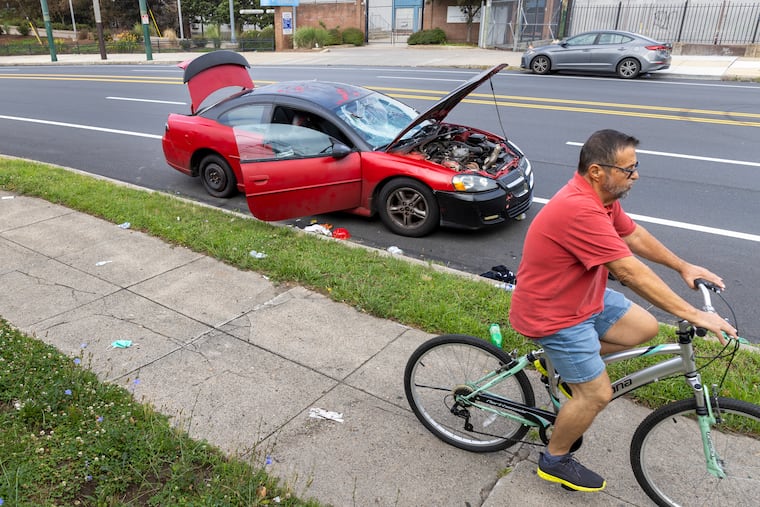
There seems to be a wide consensus among residents, civic groups, and even an article in this newspaper that abandoned automobile removal has ceased to be a relatively efficient city service.
The mayor has made clear she gives cleaning up the city a high priority. Whatever debate this may generate about its efficacy thus far, it was Mayor John F. Street who, over two decades ago, declared war on abandoned cars. He successfully made headway at improving this service. What has changed, then, if residents have to wait up to 120 days for completion of the removals?
A clear explanation from the mayor — this should come from the top — needs to be given about this. Philadelphia cannot afford to step backward on any code/sanitation/safety-related service provision, especially where significant progress had been made.
Fortunately, we still have the graffiti abatement team to show us all what efficient and effective service provision looks like each day.
Ryan Caviglia, Philadelphia
Join the conversation: Send letters to letters@inquirer.com. Limit length to 150 words and include home address and day and evening phone number. Letters run in The Inquirer six days a week on the editorial pages and online.