Letters to the Editor | July 30, 2026
Inquirer readers on safer roads for cyclists and Sen. Dave McCormick’s support of the SAVE America Act.
Data over politics
In a recent Shackamaxon column, Daniel Pearson admonished the Friends of Pine and Spruce (FOPS) for taking our grievances over the Pine and Spruce Street redesign to court.
FOPS represents a multitude of residents who live on and near these historic, narrow residential corridors. We engaged with the city, voiced our concerns, and sought a balanced solution that maintains safety for cyclists while preserving essential accessibility for elderly, disabled, and young residents. But City Hall, so far, is beholden to a single, vocal advocacy group, and insists on designing our streets based on politics instead of data, good practice, and engineering. That is slowly changing, with our help.
In pursuing our lawsuit, we are exercising a foundational constitutional right. The judiciary exists precisely to act as a check on government overreach, improper legislative process, and a lack of transparency.
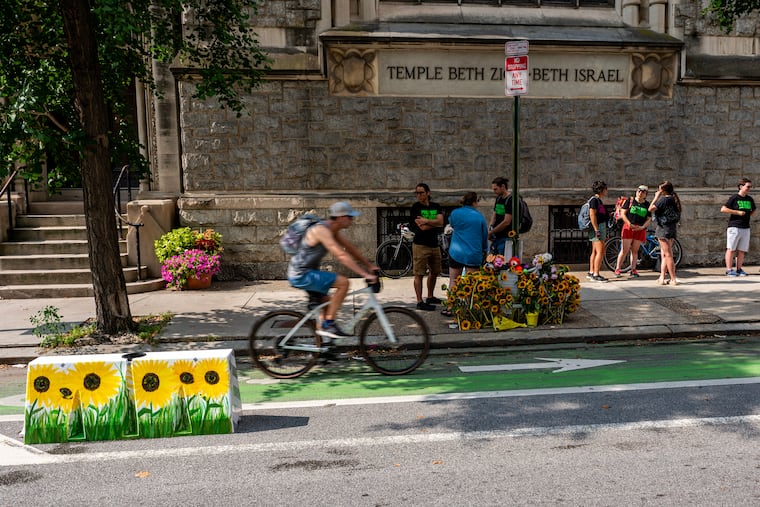
The 2024 death of Barbara Friedes was a terrible tragedy. But even in the wake of tragedy, municipal governments must follow the law and rely on sound traffic engineering. The driver in that tragic crash was severely intoxicated and traveling on Spruce Street faster than the speed limit set for I-95. Banning residential loading and erecting concrete barriers does nothing to solve the single greatest cause of traffic deaths: excessive speed.
Instead, the city’s rushed, politically driven response would make the streets more dangerous. Walled-off lanes turn narrow streets into high-speed e-bike expressways with no egress for pedestrians, separating seniors, paratransit vans, and emergency vehicles from front doors.
We all want safer streets — for all road users: pedestrians, cyclists, motorists, residents, seniors, and people with disabilities. It should be guided by data, accessibility needs, and open public input, not political decrees passed without transparency. This political coercion will soon come to your neighborhood. We’re all fighting back.
Lloyd Brotman, president, Friends of Pine and Spruce
Accountability
Sen. Dave McCormick once explicitly rejected Donald Trump’s Big Lie about winning the 2020 election. Now mum on election denial, he avidly supports the SAVE America Act, purportedly to stop voter fraud.
You may ask: Why would anyone object to proof of citizenship to register to vote? Let’s see: You need either an original birth certificate or a current U.S. passport. REAL ID? Won’t cut it. And if you’ve changed your name, you’ll need legal proof of any changes. Married? Legal proof. Divorced? Legal proof. Surely everyone has the time, access, and money to procure all these documents.
The fraud here is Sen. McCormick parroting the lies Republicans have been pushing for decades about rampant voter fraud. The SAVE Act is a draconian solution in search of a problem, intended not to protect democracy, but to subvert it.
Rosalind Holtzman, Elkins Park
. . .
Let me get this straight. The Inquirer publishes an excellent article about Sen. Dave McCormick and others who are pushing the ill-conceived SAVE America Act on us, and it concludes by saying McCormick declined to be interviewed for the article. All we get are quotes from his canned town hall, where he cherry-picks questions and offers prepared responses. But then we give the senator space for a Letter to the Editor to repeat his one-sided false arguments uncontested. Let’s have some legitimate dialogue with the senator and stop giving him space for his infomercials.
Helene Hilger, Philadelphia
Join the conversation: Send letters to letters@inquirer.com. Limit length to 150 words and include home address and day and evening phone number. Letters run in The Inquirer six days a week on the editorial pages and online.