Should Democrats campaign for more English lit majors?
A new Trump attack on student loans is part of a push to crush the liberal arts. How can the humanities fight back?
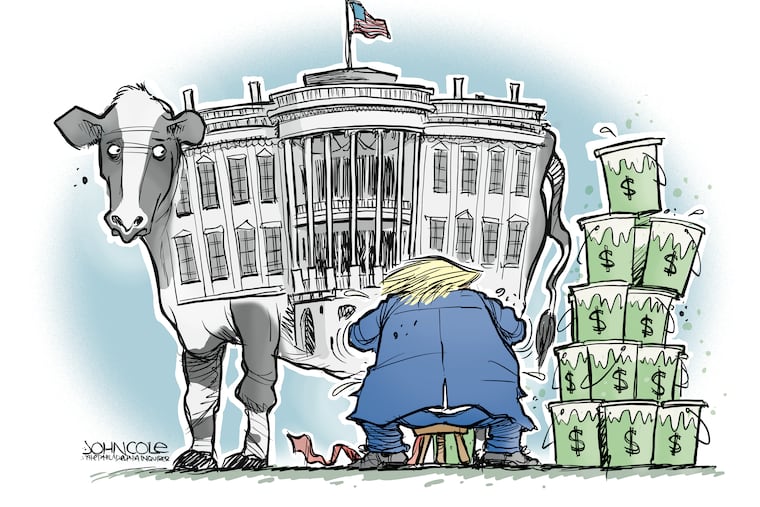
There is one war Donald Trump is actually winning — unfortunately.
Clearly it’s not the ongoing fiasco in the Strait of Hormuz. But Trump and his MAGA culture warriors keep gaining new territory here at home in their all-out assault on knowledge, with America’s college campuses as the prime battleground.
The Trump regime is fighting to destroy liberal arts education in America, and this summer it opened a new front in the campaign to make going to college all about the narrow pathway to a job in a robot-driven economy — and little more.
A little-publicized new rule published last month by Trump’s Department of Education aims to end student loans to young people who major in fields that lead to jobs with below-average incomes. The rule won’t take effect until next year, and there remain real questions about how it might work and which programs would be most affected. But some experts are worried that training for essential jobs like social work or teaching will be harmed.
“I’m happy for an MBA to pay back every penny they borrowed,” Ted Mitchell, president of the American Council on Education and a former college president and education policymaker in the Barack Obama administration, told me last week. “But social workers and teachers shouldn’t be submitted to the same logic.” In other words, some jobs are more valuable to a healthy society than the dollar value we assign them.
Still, education experts who are critical of the Trump regime over many other policies say there could also be some good to come out of student loan reform, since the rule is likely to most heavily impact for-profit institutions, especially those that have abused the system to saddle young people with high debt and poor job prospects.
But Roosevelt Montás, who leads the Chang Chavkin Center for Liberal Education and Civic Life at Bard College, said the positive benefits of going after for-profit college scandals need to be weighed against the broader harm to the idea that a liberal education will give students more than a return-on-investment balance sheet.
Montás called the student loan rule “an example of how the Trump administration has found areas that, in fact, deserve criticism and require reform in higher education, and he has used these as a tool to destroy and weaken the system.”
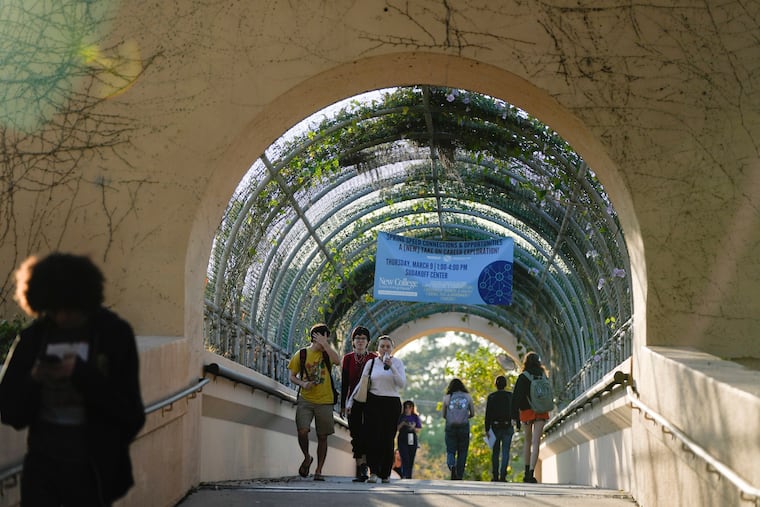
This month, most of the nearly 20 million university students in the United States are drifting back to campus to begin a new academic year — with broad agreement across the political spectrum that American higher education is in crisis.
Undergraduate enrollment actually peaked in 2010, when that era’s economic crisis was at its nadir, and has declined gradually in most years since. Public trust in higher education — as with other large institutions — has plummeted even more steeply. You could write a book about how college access, the insane cost of tuition, and resentment between educational haves and have-nots drive our deep, bitter political divide.
The Trump regime is not letting this crisis go to waste. Ignoring the real roots of the problem — the steady privatization of getting a college degree since the 1970s — the MAGA government has been following the Project 2025 blueprint for waging an ideological war on campuses it sees as breeding grounds for future liberals.
The student loan rule is just the latest onslaught. In recent weeks, a White House policy paper mapped out a massive shift of as much as $200 billion away from grants for basic science on university campuses and toward work on artificial intelligence, or AI, with private companies competing for those dollars.
Meanwhile, a surprising number of universities — rather than fighting the Trump agenda — are saying they’ll sign onto a so-called reform agenda that merges some broadly popular measures, such as reducing tuition, with right-wing wish-list items like more conservative faculty, ending efforts to boost enrollment numbers for students of color, and cracking down on protests. This builds on the regime’s push to end campus diversity programs.
This overlap of societal and governmental crises has fallen hardest on small liberal arts colleges — some, like the experimental, born-of-the-1960s Hampshire College, have announced plans to close altogether — as have some degree programs in the humanities at larger schools, which have seen layoffs or even elimination.
“I think we’re at a real moment of crisis,” Montás said, noting that programs in the humanities and some social sciences were already weakened by downward enrollment trends and by ideological controversies even before the Trump regime targeted them. “These have energized questions about the value and cost of education. This combination of factors is proving deadly.”
But while the headlines tend to focus on campus closings or the latest faculty layoffs, the bigger story is the government’s push to radically reform the role that higher education plays in a healthy democracy.
In what we now clearly see as a golden age of U.S. college from the late 1940s into the ‘70s — when tuition was generally low, and enrollment was skyrocketing — advocates saw more diplomas as a way both to populate a new “knowledge economy” and also mold better citizens who’d be less likely to start World War III. Majors like English literature, philosophy, and sociology soared — as did the inclination to question authority in the fraught era of civil rights and the Vietnam War.
That last part, arguably, is what triggered a 60-years-and-counting conservative backlash that is currently maxing out under Trump. His regime doesn’t want to wreck college altogether — white dude-bros still need their keg parties, after all — as long as the ultimate outcome is creating worker drones, not critical thinkers.
The seeds exist for a backlash that might swing the pendulum back to where it was around 1965, but no one has really planted them. Instead of fighting the destruction of liberal education as a true opposition party, far too many Democrats have instead complied — insisting they support colleges, but only because they create jobs.
“Every student should have access to an education that aligns with industry demands and evolves to meet the demands of tomorrow’s global workforce” is a quote that sounds like it was ripped from Project 2025, but it was posted in 2022 by Joe Biden’s education secretary, Miguel Cardona. Democratic governors like Pennsylvania’s Josh Shapiro spend more time touting trade school than talking about expanding opportunities for four-year bachelor’s degrees.
I’d argue that these politicos are misreading the current zeitgeist. There’s growing alarm these days about students no longer reading books in school (or anywhere), about how smartphones are crimping kids’ ability to communicate and grow, and about how little young people learn about how our government works. These anxieties have only metastasized with the rapid growth of AI.
Increasingly, politicians who last year were raving about the economic development possibilities of AI data centers are furiously backpedaling in the face of a full-on public revolt. While a lot of the backlash is driven by issues such as noise pollution or higher electric bills, the public unrest also reflects a more cosmic concern: Do we really want robots not only taking our jobs and making our art but thinking for us, too?
It’s easy for a politician to be against something, like a data center. But who is going to fight for something, like the humanities? The headline of this column about Democrats making a demand for more English lit majors into a political rallying cry was somewhat facetious — but should it be? Real leadership would mean fighting to give more young people more opportunities to flourish as creators and thinkers, without being terrified the other side will call you an “elitist.”
Mitchell said he’d like to see an expansion of federal loan forgiveness programs for graduates who go into public service careers like social work or teaching — perhaps on the state level — as part of a much broader return of the vanishing idea that higher education can be a public good.
» READ MORE: Inside the fight to save American college from runaway careerism | Will Bunch
Both Montás and Mitchell also advocated for college programs that would better integrate both career skills training and wider education in the liberal arts and civics. Mitchell touted, for example, a new program at the University of Texas which — working with the online learning company Coursera, where he is a board member — allows students to earn career-readiness certificates on their transcript even as they also pursue a major in the humanities.
Montás said his new center at Bard is part of a burgeoning national movement to grow general education programs within universities that promote classroom discussion through a heavy emphasis on what some call “the great books” of modern civilization. Advocates seek a core curriculum that would promote critical thinking and discourse beyond career-focused majors such as business or engineering. It would be, Montás said, “a return to approaches and conceptions of liberal education that are traditional — an emphasis on great books, an emphasis on character, an emphasis on civic education.”
The 2026 campaigns for Congress are well underway, and while you’ll hear a lot about vital issues like expanding access to healthcare or lowering gas prices, hardly anyone is running on bringing books back into the classroom or saving the humanities major. That feels like a big mistake. When there is a war against the very notion of higher education, somebody needs to be fighting back.

Sign up for the Will Bunch Newsletter