31-year struggle to wipe out polio
Earlier this month, health officials confirmed what they had hoped to never see again in Nigeria: two cases of wild poliovirus.
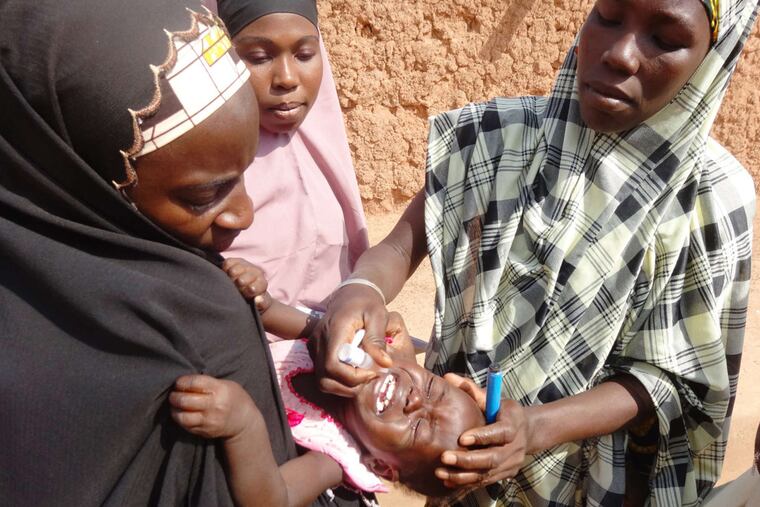
Earlier this month, health officials confirmed what they had hoped to never see again in Nigeria: two cases of wild poliovirus.
The country had been polio-free for two years. These cases were in a region where raids by the Islamic extremist group Boko Haram and battles with the Nigerian army have made it difficult to vaccinate children, many of whom have been forced from their homes. In recent years, polio workers have been targeted by rebels. Nine were killed in Nigeria in 2013. Earlier this year, seven police officers guarding polio workers in Pakistan and three workers in Afghanistan were killed.
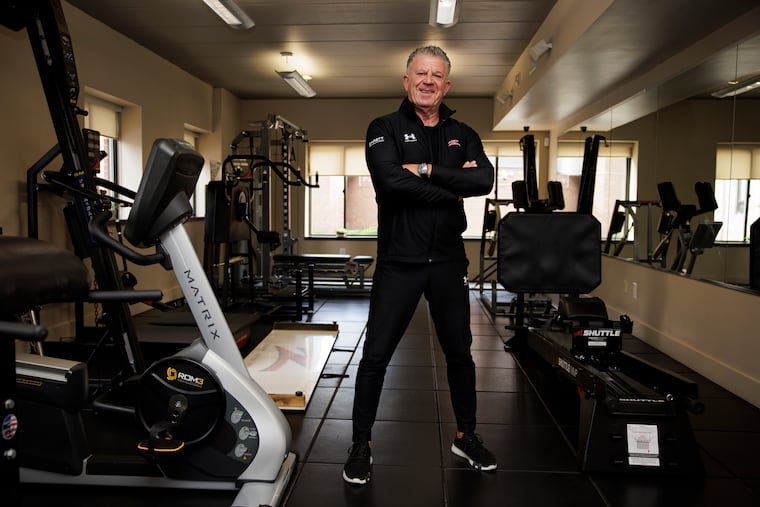
John Germ calls polio "a wicked disease" because it attacks the most vulnerable: children under the age of 5, mostly. They can be crippled by it.
Germ, of Tennessee, is the president of Rotary International, which for 31 years has worked to eradicate polio from the world. The term "wild poliovirus" is used to differentiate it from the rare cases of infection from the live virus that is used in polio vaccines.
Germ came to the Philadelphia area last week to speak about polio and to participate in a Rotary fund-raising event at Tuesday's Phillies game, where he threw out the first pitch.
Let's talk about Nigeria.
The two cases were found in the northern state of Borno, an area that was controlled by rebels, also an area that is very difficult to get to. This virus was traced to a 2011 virus, likely dormant in the sewage there for years. Any time you have a setback like this, obviously it's a disappointment.
It truly does show that until every case of poliovirus is wiped out, it can rear its ugly head. It has re-energized the Rotarians and the government, along with the World Health Organization, UNICEF and the U.S. Centers for Disease Control and Prevention to further reach out and do what is called a mop-up campaign. Volunteers will deliver the oral polio vaccine to all the children in that surrounding area. We're still working on the plans.
For 31 years, Rotary has worked to end polio. Why this disease, in particular?
In 1979, a man by the name of Sir Clem Renouf was president of Rotary International. He had read in Time magazine that smallpox had been eradicated. He thought, gosh, wouldn't it be great if something like this could happen with Rotary leading the charge. Up until that time, Rotary had only been involved in community projects.
It turned out there was a virus that could be eradicated because there was a vaccine. It was something that could be administered by volunteers because it was an oral vaccine; you didn't need a shot. And it was fairly inexpensive. It was polio.
Rotary took on the task of doing a project for $760,000 to vaccinate six million children in the Philippines. After three years, polio in the Philippines was gone. So then Rotary took it on to eradicate polio around the world. They were joined by the World Health Alliance, which consisted of a lot of the countries of the world, plus WHO, UNICEF, the CDC. In 2007, the Bill and Melinda Gates Foundation joined us in that fight.
I was recently in Dallas, Texas, and I went to visit an individual who was a Rotarian, a major donor to the Rotary Foundation, a lawyer, and he lives in an iron lung. It's hard to imagine that in today's world, there are still people that were afflicted with this disease in the '50s or so that are now still living in iron lungs because of that. The U.S. has been polio-free since 1979. But here's this individual and his main concern was the collars that help seal around the neck for this machine, and whether or not the pump might fail.
What are some of the biggest milestones?
One of the biggest moments was in 2014, when India was certified by WHO as being polio-free. Here's a country that is so large, and there were areas that were having 500,000 births a month. It brought the world's attention to the fact that, yes, polio can be eradicated from a massive country like India. A lot of people believed that when India became polio-free the world would be polio-free.
What is the current status of polio, worldwide?
Pakistan has 13 cases. Their last was in June. Afghanistan has six cases. Their last was in May. So, hopefully, we are winning this battle. We're continuing to work, and the governments of Afghanistan and Pakistan are working hard, along with the military, to get to some of those isolated villages and villages that are war-torn or in the control of rebel groups. We think we're making great progress. But even after the last case, it takes three years before a country would be eligible to be declared polio-free.
It's been a costly program, and it is going to take about $1.3 billion to finish it up. Until polio is wiped out, you have to continue to vaccinate. We're having to vaccinate more than 400 million children a year. Even in the U.S., children are still getting the polio vaccine. In addition, we're having to do surveillance in 79 countries to make sure that they remain polio-free.
Rotary itself has raised about $1.4 billion over the course of the campaign. The whole world is up to $11.3 billion. Rotary is still raising money. The Gates Foundation is still contributing. We will continue to do that along with the governments of the world.
More broadly, what lessons does the effort to eradicate polio teach us?
It teaches us that it takes persistence. It takes tenacity. And it takes partnership. It takes WHO, UNICEF, the CDC, the governments of the world agreeing to work together. It takes the Gates Foundation and other private-sector individuals. It takes Rotary working with businesses to raise the money that we've had to raise. It's a total partnership effort. Together, everyone achieves more. Nobody could have done it alone.
The important thing is that, as with any other program or project, everyone has to continue to work hard. You can't give up. Yes, this may be a setback in Nigeria, but unfortunately it happens. So it just makes us want to work harder.