Dionne: Principles that bind the anti-Trump forces
The movement that Donald Trump's presidency has inspired against him is broad, passionate, engaged, and determined. Its prospects depend upon highlighting a set of principles that can unite an American majority already appalled by what Trump is doing to o
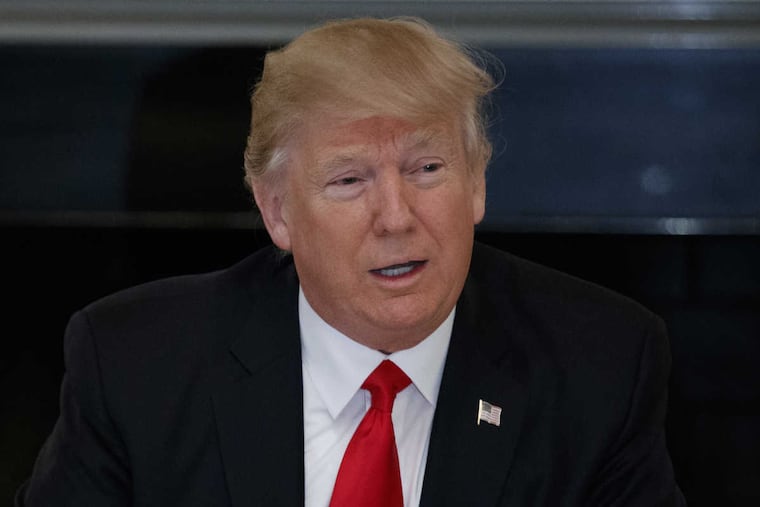
The movement that Donald Trump's presidency has inspired against him is broad, passionate, engaged, and determined. Its prospects depend upon highlighting a set of principles that can unite an American majority already appalled by what Trump is doing to our country.
While almost everything in our politics has a strongly partisan cast, the anti-Trump forces cannot be defined by party or ideology. That's true even though, with a sadly short list of exceptions, Republicans in the House and Senate have been timid in speaking out against Trump's overturning of long-established norms and values.
Over time, these profiles in meekness will regret where they stood in the early going. But they must be prodded to break with the most egregious of the president's policies.
In the meantime, many conservatives beyond the ranks of elected officialdom have spoken up in defense of tolerance, openness, and democracy. The concerns that bind left, center, and right must stay at the forefront of efforts to stop the administration's abuses, even as those of us who are progressive will challenge the reactionary tax, budget, and regulatory policies that Trump will use to buy off Republican leaders.
The obligations that ideology should not encumber include speaking out against the anti-Muslim character of Trump's travel ban: Those who defend religious liberty must also fight religious discrimination.
There ought to be solidarity in condemning an approach to Europe that is pushing away the United States' long-time democratic allies and currying favor with the autocrat in Moscow.
A disorganized, slapdash, and careless approach to policymaking that turns chaos into an achievement rather than a problem should horrify all Americans. It is dangerous and also disrespectful of the responsibilities power imposes.
Party loyalty should not get in the way of insisting upon a respect for fact and evidence - or of calling out lies. Consider that when Secretary of State Rex Tillerson told his department's employees that "honesty will undergird our foreign policy," his words could be seen, whether intentionally or not, as a rebuke to an administration that touts "alternative facts."
And Trump's critics don't have to agree on a single policy to bemoan his crude and sloppy use of language and to see this as a genuine obstacle to honorable politics and a well-functioning government. He doesn't just want to repeal the Johnson Amendment that bars religious organizations from getting involved in elections. He wants to "destroy" it. He lightly threatens war with Mexico to go after "bad hombres" and undermines our relationship with Australia by recklessly accusing one of our very closest friends of wanting to export "the next Boston bombers."
This is about more than style. As George Orwell taught us, how people talk offers a clue about how they think and what they value. Our language, he wrote, "becomes ugly and inaccurate because our thoughts are foolish, but the slovenliness of our language makes it easier for us to have foolish thoughts." He added: "If thought corrupts language, language can also corrupt thought."
Pretending that there is something "brilliant" or "populist" about how Trump communicates is one of the worst forms of elitism because it demeans average citizens who have always appreciated eloquence, as our greatest leaders knew. And please don't compare George W. Bush to Trump on this score. We poked fun at Bush's ability to mangle sentences, but he respected the need to find words that could move and unite the nation.
Finally, we must resist a bad habit infecting political commentary that sees Trump's irresponsibility, bigotry, and casual cruelty as a heroic form of "disruption" aimed at bringing down "the establishment."
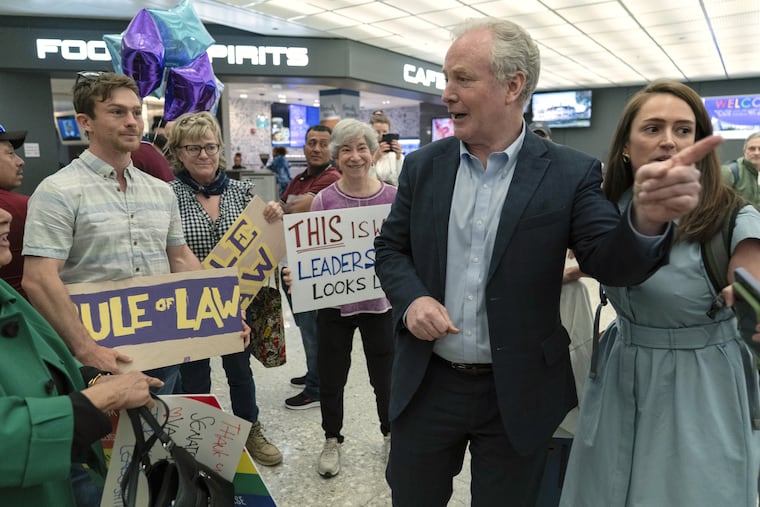
No. The people in the streets rallying against Trump are not the establishment. Those political and business leaders who are, for now, playing along with and enabling Trump very much are the establishment.
Americans who tell pollsters they oppose Trump are not defending some status quo. They are standing up for humane principles that Trump is threatening: democracy over authoritarian nationalism; religious pluralism over bigotry; clarity of thought, speech, and action over a self-involved indiscipline; civil rights and civil liberties over their unchecked abuse; and a basic decency toward each other over a political approach devoted to disparaging and bullying adversaries.
The democratic left and the democratic right will continue to disagree on many things. But these commitments should transcend all of our divides.
E.J. Dionne is a Washington Post columnist. ejdionne@washpost.com @EJDionne