CHOP researchers get a lead on neuroblastoma
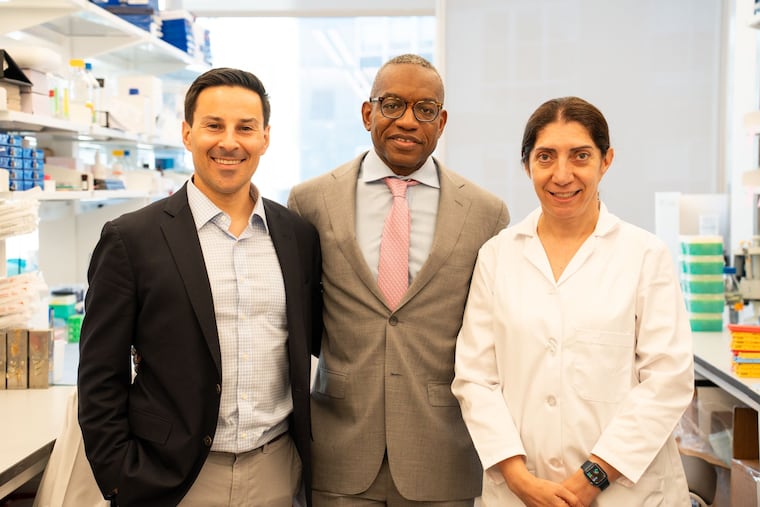
John Maris has spent more than 20 years trying to understand why some children get an often-fatal cancer called neuroblastoma. There was no obvious environmental factor, and a genetic variation seemed to be involved. But how to find it?
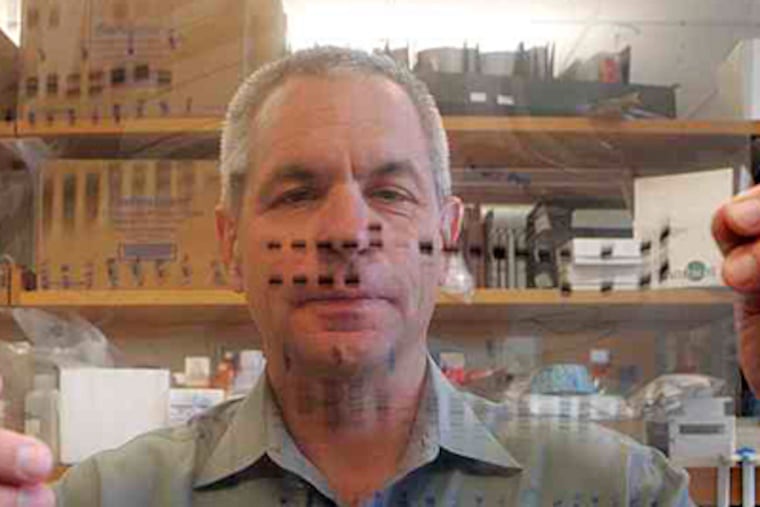
John Maris has spent more than 20 years trying to understand why some children get an often-fatal cancer called neuroblastoma. There was no obvious environmental factor, and a genetic variation seemed to be involved. But how to find it?
Then, he and his colleagues at Children's Hospital of Philadelphia got the chance to try something that would have been unimaginable just a few years earlier: Scan the DNA of hundreds of children stricken with the disease and compare it with DNA from thousands of healthy children in a control group.
In the last 13 months, they have gone from knowing almost nothing about why some children get neuroblastoma to identifying three genes associated with risk. And this summer the project has led them to begin the first related drug trial to help neuroblastoma patients.
"Now we're starting to get some significant traction," said Maris, who has devoted his career to studying and treating children with neuroblastoma, which causes 600 to 700 new cases each year. Among them was Alex Scott, founder of Alex's Lemonade Stand Foundation, who died from her cancer at age 8.
The most recent among this spate of discoveries involved a whole chunk of DNA. This chunk is usually copied several times - the total number of copies varying from person to person.
Maris and colleagues found fewer copies among the children with neuroblastoma than among the normal children. They published their findings last month in the journal Nature.
Other experts cheered the discovery and Children's Hospital's foresight in creating the world's largest repository of children's DNA, and emphasizing large-scale genetics studies, sometimes called GWAS, for genome-wide association studies.
"It was John's vision to go to the leadership at CHOP and say we need to do this," said Stephen Chanock, chief of translational genomics at the National Cancer Institute. "They've done it magnificently. . . . Kudos to them."
But the more scientists learn about the genetics of neuroblastoma and other cancers, the more formidable it all appears. "The galling thing about these genome-wide association studies is that these diseases are more complex than we ever imagined," Chanock said. "For those of us in the trenches, it's breathtaking in terms of the complexity of what cancer is."
Maris said that only five years ago, they were holding out hope that variations in maybe two or three genes would explain why some children were at risk for neuroblastoma. "The reality is it's going to be 20 or 30 genes - or maybe 40."
And if this latest finding is any indication, genetic errors can come in different forms, from one misplaced element of code to entire sequences that are repeated or missing.
Biologists have only recently come to appreciate how many genes come in multiple copies, and how often this so-called copy number varies from person to person.
The appreciation started a few years after the completion of the Human Genome Project in 2000. In that massive public/private effort, scientists took DNA from a few volunteers and read the chemical code carried in its coiled strands - a three billion-character book written in the four letters A, T, G, and C.
The result seemed to show that all humans were nearly identical, and most of the differences were associated with single letter changes.
But when other scientists tried to compare the original human genome with the DNA of new volunteers, they were mystified to find dozens of whole sections missing or carried in multiple copies.
Those differences became known as copy number variants (CNVs). Maris says this is the first time anyone has found a CNV associated with cancer of any kind.
To find it, he relied on a $39 million research complex at Children's Hospital called the Center for Applied Genomics, established in 2006. The center has also contributed to new findings in the genetics of autism and Type 1 diabetes.
"They were the key enabler," Maris said.
The first two gene findings associated with neuroblastoma also relied on the genomics center. One of those, announced last August, focused on a smaller group of patients with a rare inherited form of the disease.
Searching for abnormalities that these patients had in common, researchers were able to identify a suspicious mutation in a gene called ALK. That is what is called an oncogene, a gene whose normal function orchestrates cell growth and that, when damaged, can allow cells to grow out of control.
Maris found that in a few cases where the disease was not inherited, the tumor cells in neuroblastoma had damage to the ALK gene.
Because the same gene is damaged in some lung cancers, Pfizer has already created a drug that is being tested for that disease. Maris thinks that same drug, PF-02341066, might help up to a quarter of children with neuroblastoma. Children's Hospital is gearing up to start testing it on neuroblastoma patients later this summer.
Even if it worked, it would not cure most patients, though, so they have continued to comb through the genetic code. CNVs are particularly hard to detect, he said. "It took a major technological breakthrough," which he attributes to his coauthor at CHOP, Sharon Diskin, who had previously worked as an aeronautical engineer.
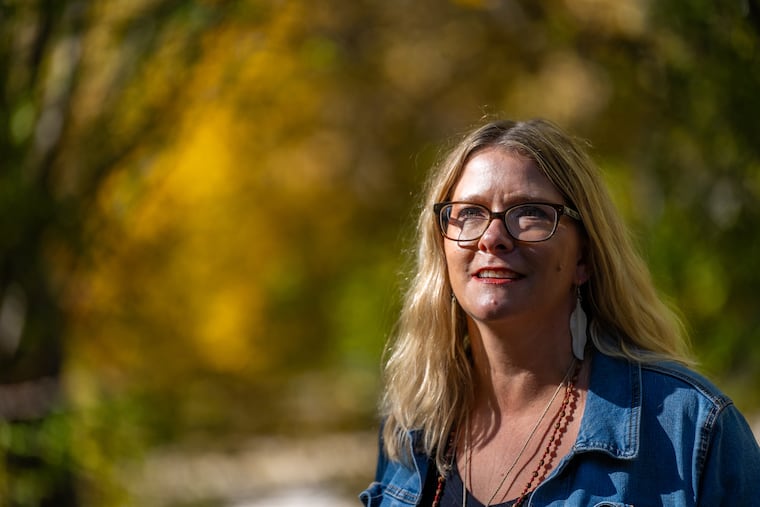
"I was seeing people around me develop cancer, and it made me want to change fields," she said. "I thought perhaps my experience in engineering or computation could fill a need in that research."
Maris and Diskin found that the healthy children were more likely to have extra copies of this particular stretch of DNA, which contains a gene called NBPF23. Those with the disease were likely to have one copy or none at all.
The NBPF23 gene appears to be expressed in cells in the developing nervous system, Maris said. That is what you would expect in neuroblastoma, which is a nervous-system cancer.
Perhaps this latest finding will help them figure out what triggers neuroblastoma, and why about half the cases are relatively benign and clear up on their own while the other half are more malignant.
While it's not encouraging that neuroblastoma could be tied to dozens of genes each contributing a tiny bit to overall risk, Maris suspects they may all tie together.
"We have some evidence that it won't be 40 random genes," he said, but instead they will all be involved in the maturation of the nervous system. "So they'll all collapse down to a specific pathway."
Then they would finally understand what triggers the disease, and, possibly, a way to prevent it.