Pennsylvania’s data center boom needs a pause | Editorial
Nearly three-quarters of the state’s voters oppose data centers in their communities, yet more than 50 are planned or under construction. Lawmakers should hit the brakes on unchecked growth.
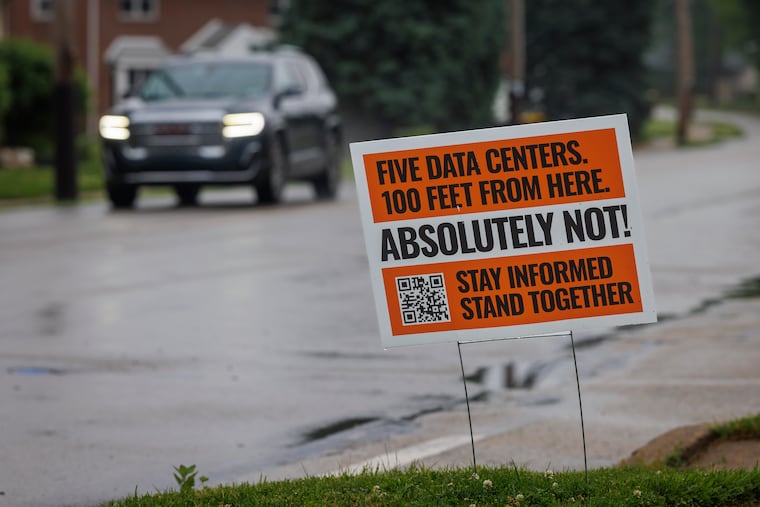
What does it say about Pennsylvania’s political leadership when U.S. Rep. Ro Khanna, a progressive Democrat from California, seems more in tune with where voters stand on data centers than many top elected leaders in the Keystone State?
Khanna, a native of Bucks County, said Pennsylvania should do more to safeguard communities from the proliferation of data centers across the nation. He’s proposed a Data Center Bill of Rights to protect residents from the environmental and financial harms caused by the energy-sucking centers needed to fuel the artificial intelligence boom.
If Congress approved Khanna’s measure — which is unlikely as long as Republicans control both chambers in Washington — it would pause the current runaway development of data centers.
Pennsylvania is among the fastest-growing states for data centers. More than 50 of them have been proposed, planned, or are under construction in the state. So far, six are being built and 10 have received at least one state-level permit approval, according to Shapiro’s office.
Opposition to data centers may be the only issue that unites voters from all sides of the otherwise divided political landscape. In Pennsylvania, a whopping 74% of voters are against building an AI data center in their community, according to a recent Quinnipiac University poll.
» READ MORE: Trump struggles to tell the truth about the economy as Americans struggle to make ends meet | Editorial
Residents fiercely oppose a two million-square-foot data center proposed outside Conshohocken. Tempers flared at a public meeting in King of Prussia where the same developer, Brian O’Neill, wants to build five other data centers totaling 4.6 million square feet.
Several have already been built in the Philadelphia region, while two are under construction: one for Amazon in Bucks County, and another for Microsoft in Cumberland County in New Jersey.
Across the country, residents have complained about sharp increases in electric bills — including a 20% increase in Pennsylvania since 2024 — caused, in part, by the growing power demands of data centers.
Others said their once-quiet communities have been ruined by the constant noise coming from the facilities, including one in Vineland, N.J.
Still others said data centers caused their water wells to run dry, while many fear increased water bills from the need to cool large data centers that use an estimated five million gallons of water each day, equal to the usage of a town of up to 50,000 residents.
Sen. Dave McCormick (R., Pa.) has championed the development of data centers along with President Donald Trump. (Conflict of interest alert: McCormick’s wife is an executive at Meta, one of the leading developers of AI data centers.)
Gov. Josh Shapiro (D., Pa.) initially trumpeted efforts to bring data centers to the state. Just over a year ago, Shapiro said his administration was “all in” on AI, but his position has shifted somewhat in the face of the growing public backlash.
» READ MORE: Cheltenham High’s hazing case exposes a loophole in Pennsylvania law. Harrisburg should close it. | Editorial
In May, Shapiro, who is up for reelection in November, unveiled standards designed to place guardrails on the energy usage of data centers and give local communities more input.
In recent months, Shapiro has met with some residents about data centers and acknowledged concerns about the impact on utility bills and the environment.
However, the governor still supports $2 billion in tax breaks for data centers if they meet his proposed standards, even after the state House voted 197-5 to repeal the sweetheart deal.
Shapiro’s opponent in November, Treasurer Stacy Garrity, initially supported data centers, but now favors a pause. The shifting positions of both gubernatorial candidates underscore how data centers are roiling politics and animating voters.
Supporters argue the data centers will bring investment and construction jobs to the state, and position the country to compete in the global AI race.
But at what cost to consumers left to shoulder the rising electric and water bills, not to mention the environmental harm?
Lawmakers have been slow to consider that part of the equation, as no one can say if the hyped benefits outweigh the real costs.
Elected officials are supposed to represent the interests of the people, and not the deep pockets of big businesses. Until lawmakers find ways to protect residents from the true impact of AI data centers, a pause makes the most sense.