Obamacare health exchanges are in trouble. Is that bad?
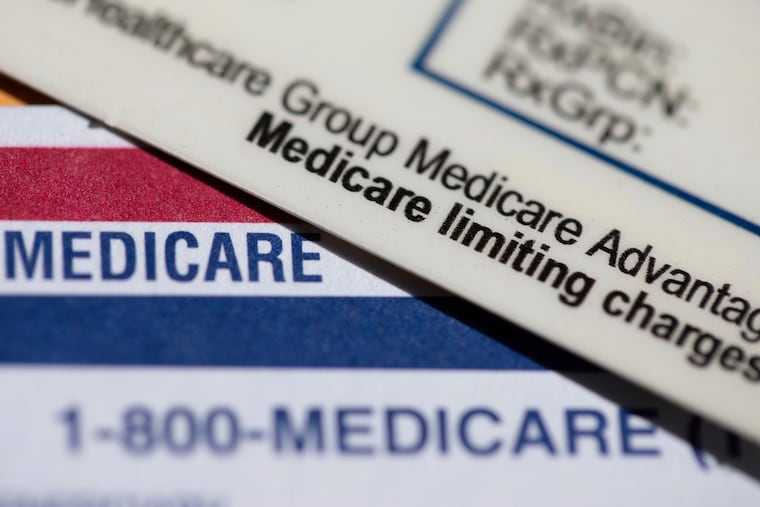
Next year Aetna will no longer offer coverage in 11 of the 15 state exchanges where it currently sells Obamacare plans. Its action follows similar decisions by UnitedHealth Group, the country's largest health insurer, and Humana, another of the country's five largest.
All these insurers claim they're not making enough money as a result of "adverse selection," meaning not enough healthy people are signing up for the Obamacare exchanges while too many people with serious health problems are enrolling.
At the same time, health insurers are now merging with or buying one another. Aetna is trying to buy Humana and Anthem wants to buy Cigna. They say they're doing this in order to obtain economies of scale that will reduce costs. But that's misleading. Studies show that cost savings from consolidations, mergers and asset buyouts are only short-term benefits. Any overall operating synergy depends on whether the surviving entity enhances several other capabilities. Rather than cost savings, synergy typically results when the new entity either obtains greater pricing power, combines different functional strengths with the acquired company, and/or achieves higher growth in new or existing markets.
Of course Aetna and the others won't admit they want to merge to reduce competition and, thereby, squeeze higher profits from their customers (employers, consumers, governments) and their suppliers (hospital systems, physicians, other health care professionals).
Aetna combined this announcement to withdraw from three-quarters of the states where it competes on exchanges with a threat to quit the rest if the Justice Department refuses to bless its Humana takeover. In other words, unless Aetna can fatten its profits by further gouging hospitals, employers, and, most importantly, taxpayers and consumers, it has told the government to fend for itself in dealing with problems of health insurance monopolies and the larger futility of letting competition among insurers drive the entire system.
Reacting to the news about Aetna quitting the exchanges, the Wall Street Journal's economics writer, Greg Ip, wrote glowingly about a suggestion from a conservative think tank that proposes to remedy Obamacare's inherent insurance problem with tax subsidies. The idea is that tax credits would give people enough money to buy private health insurance with pricey premiums. But Ip acknowledges that for some individuals, "the credit may only be enough [to buy policies] for catastrophic coverage." According to the rightwing think tankers, that "is what insurance was originally supposed to do."
In the same spirit, children born with a clubfoot in the dim past were "originally" strangled in their swaddling clothes, but it is to be hoped that society's expression of human empathy has advanced on both infanticide and health insurance.
So the important question here is whether this slow motion crackup of Obamacare is bad. The answer is yes, it's bad, but bad is good because America's "money medicine" health care system must get worse if it is ever to get to better.
The Obamacare strategy of competing insurance companies directing health care was designed to exclusively address coverage. While more people with health coverage is good, any gains made under Obama's over-compromised approach were certain to remain short-term because effective coverage demands more than just obtaining an insurance policy. Effective coverage also requires those plans to keep costs affordable to consumers, thereby permitting them to obtain needed care.
Obamacare does very little, if anything, to limit out-of-pocket consumer costs in the form of high deductibles and co-payments. That means while in excess of 20 million more people now have formal coverage under Obamacare than before the law went into effect in 2014, access to care eludes a growing segment of people with policies because they cannot afford the deductibles and co-pays. That will only get worse as the costs for prescription drugs, devices, lab tests and medical services continue to grow faster than wages and inflation.
At the same time, the growing premiums on the exchanges are increasing the trickle of consumers who can't even afford to buy formal coverage.
Doubtless President Obama and Hillary Clinton, assuming she is elected, will try to prop up the inherently unstable Obamacare by tinkering at the edges with subsidies, penalties and other Rube Goldberg methods. These may work for a time but they cannot resolve the fundamental conflict between a for-profit system and one that offers universal care with a uniformly high quality at an affordable price.
It is clear that the Republicans want to scrap Obamacare, but their solutions of tax credits and vouchers will replace it with two tiers of health care, one that's fine for the affluent and elusive for everyone else.
Donald Trump's position on health care, as with most issues, remains murky. He denounces the current situation but he has not specified the steps he would take toward an alternative. Increasingly, Trump defers to the standard Republican boilerplate of tax cuts and deregulation on a broad range of economic issues. Given the Republican health care proposal advanced by Paul Ryan, Trump's acquiescence to them means that while GOP leaders will express concern for the sick and the elderly, their policies will leave people to fend for themselves.
The medical-industrial complex, "money medicine," poses a grave threat to American well-being and prosperity. At this point neither of the major party candidates wants to seriously take on the challenge of fundamentally rectifying it.
Read more from the Check Up blog »