Bucks County Democrats tried for years to unseat Brian Fitzpatrick. Here’s how Bob Harvie finally did.
Bob Harvie has made history in defeating Republican incumbent Brian Fitzpatrick in Bucks County's 1st District amid a national blue wave.
Bob Harvie was still processing.
On Wednesday morning, Bucks County’s new representative-elect waded through congratulatory text messages (four hours later and he hasn’t made a dent), fielded a phone call from an excited Gov. Josh Shapiro and Lt. Gov. Austin Davis, and attended a meeting with colleagues on the county commissioners board.
“I don’t know if it’s really sunk in,” Harvie said in an interview Wednesday afternoon.
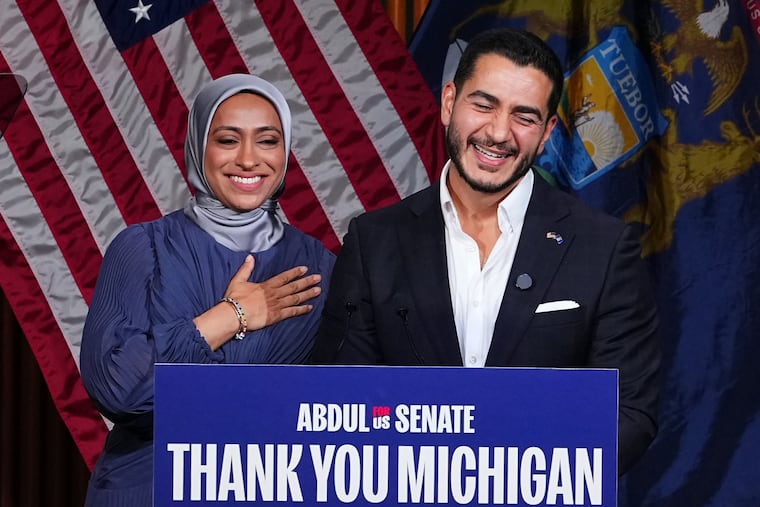
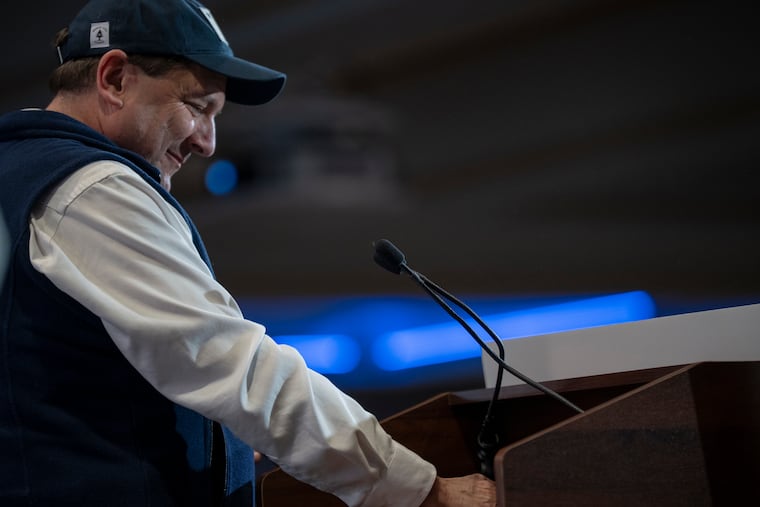
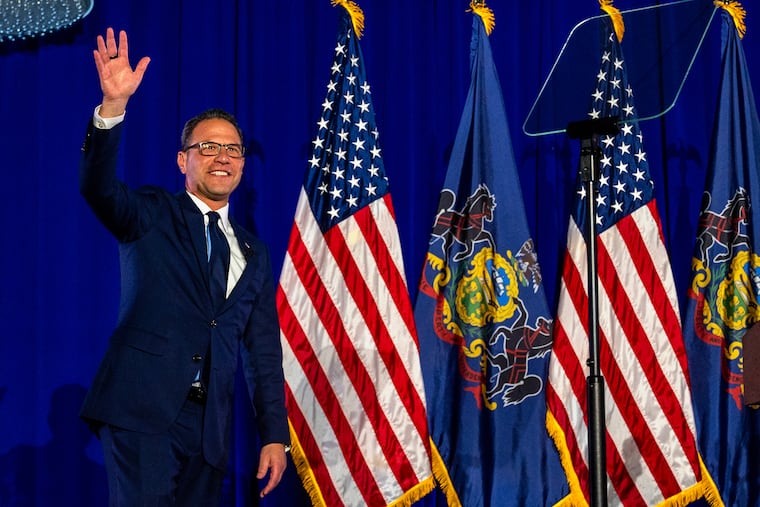
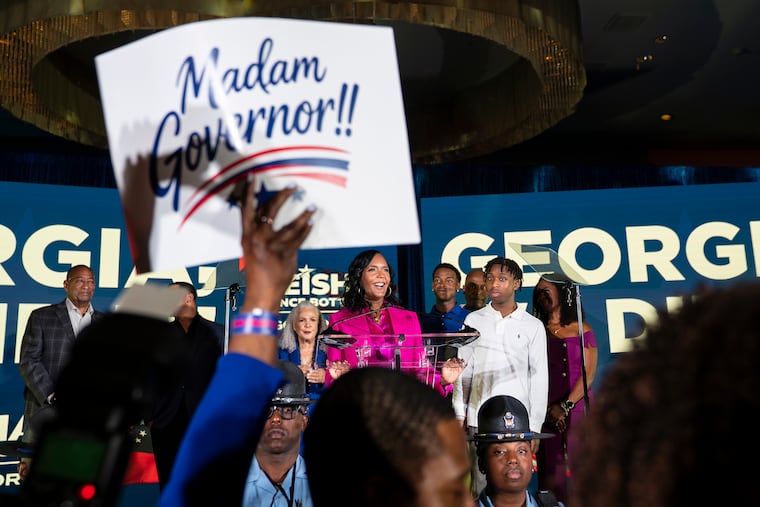
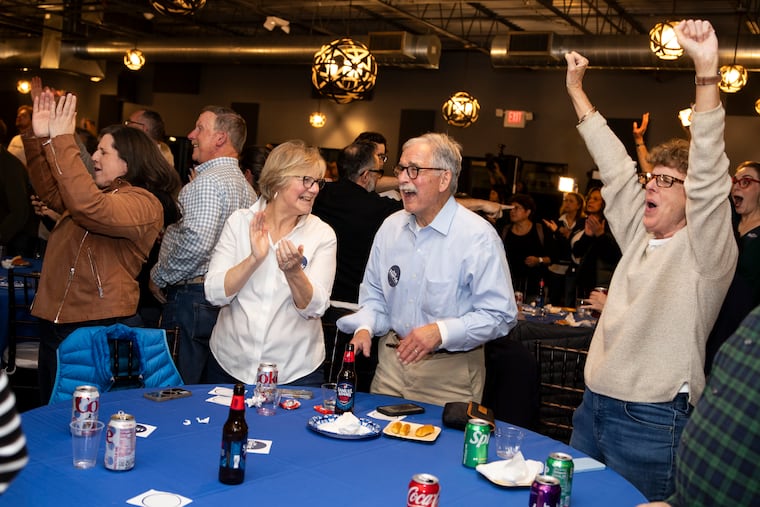
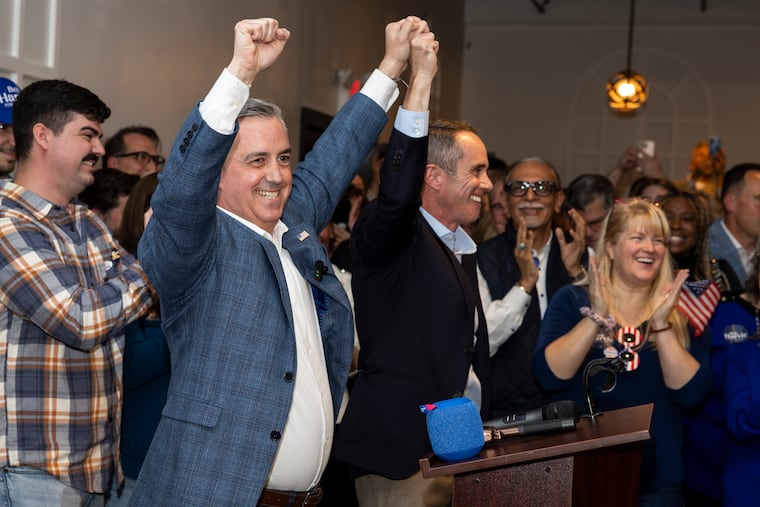
Shortly after midnight, Harvie, a Democrat, became the first Democrat to win Bucks County’s congressional seat since 2008 — a historic outcome, toppling one of the most entrenched Republican dynasties in the country. He had just delivered a victory speech at a Newtown event hall to a crowd, with adrenaline and pizza coursing through their veins.
At first, successfully challenging U.S. Rep. Brian Fitzpatrick, a five-term incumbent whose brother previously held the seat, seemed like an uphill battle.
But the momentum kept shifting in Harvie’s favor, he said, as voters in the 1st Congressional District sought to put a check on President Donald Trump’s agenda. He ultimately achieved what no other Democrat has done before — defeating Fitzpatrick.
Harvie’s victory, combined with Democratic wins in the Lehigh Valley, Northeastern Pa., and the Harrisburg area helped his party handily secure control of the U.S. House as part of a blue wave that enveloped the country.
All precincts in the 1st District, which also includes a portion of Montgomery County, shifted toward Harvie on Tuesday, an Inquirer analysis of voting data found.
The Democrat won most of Lower and Central Bucks as well as Montgomery County.
Democrats in Bucks County appeared to have played the long game to get to this almost politically surreal moment and it was enhanced this year by Trump’s toxic political brand, Shapiro’s lights-out win, and a message focused on affordability.
For the past decade the party tried and failed to unseat Fitzpatrick, who in years past had managed to gain support from voters across the political spectrum and win almost regularly by double digits, but each of those candidacies helped chip away at the Republican’s tenure resulting in this year’s seismic seat flip.
When Harvie, a county commissioner, launched his candidacy, he felt that he could win the race but because of previous election results in the district he acknowledged that he was “swimming a little upstream,” Harvie said.
Though something changed this year.
“I was a different kind of candidate than he was used to facing,” Harvie said.
‘I’m a different candidate, it’s a different time’
Harvie was the first challenger of Fitzpatrick’s to previously win countywide office. His deep roots in Bucks gave him a level of familiarity among voters.
When donors or outside supporters initially had “fatigue” about backing yet another Democrat in the 1st District, the connections he had made in running for county commissioner were crucial, Harvie said.
On top of that, the mood of the country — including voters’ deep disapproval of Trump and — combined with Harvie’s affordability-focused message as residents grapple with the cost of living proved successful.
“The argument I made from the beginning was that this is a different race, I’m a different candidate, it’s a different time, and focusing literally from the start of the campaign, focusing on issues — even before affordability was something people were focusing on, it was what we were focusing on,” Harvie said.
But Harvie had to overcome some hurdles, too, before he reached a surge of momentum in the final weeks of his campaign.
He lagged in fundraising, was without support from dozens of influential labor unions, and the investment from the national party was less pronounced during the first several months of his bid.
“The flippable four was the big three for a time, and the national environment combined with the really strong candidacy of Bob Harvie made it into the flippable four,” Bucks County Sheriff Danny Ceisler, a Democrat and top surrogate for the Harvie campaign, said in an interview.
(Ceisler’s own win against a Trump-aligned Republican in 2025, along with the Democratic sweep of other local row offices, was seen as early building block to Harvie’s win this year.)
“I was screaming to anybody who would listen that Bob Harvie had a real shot in this race, and in really the last six to eight weeks, we saw the national party begin to take interest,” Ceisler said.
The Democratic Congressional Campaign Committee, the national arm dedicated to electing Democrats to the U.S. House, started infusing cash into the 1st District race in October, which was the first time since the 2020 election they had done so.
Eli Cousin, a spokesperson for the DCCC, said that the organization has been behind Harvie since day one including adding him early on to their “Red to Blue” list.
The down-the-stretch spending was planned, strategic timing in an expensive Philadelphia media market against a well-fundraised opponent that was flooding the zone with ads, and noted that the DCCC ended up spending more on broadcast in the 1st District than the other swing Pa. swing seats. DCCC Chair Suzan DelBene also visited Bucks County and held an event with Harvie the day before Election Day.
“It would have been very easy for the DCCC to just say we’re gonna go and pick a different race and put money in somewhere else,” Cousin said. “We stayed the course. We were very intentional about when and where we were spending and what message we were carrying. And wave or not, our spending absolutely moved the needle and brought Democrats home for Bob Harvie.”
State Sen. Steve Santarsiero, chair of the Bucks County Democratic Committee, said Wednesday that now that the victory has been secured — it’s up to Democrats to deliver for voters.
“I am confident that Bob Harvie is never going to forget that lesson ... he will serve for years to come because I believe that people will see just how dedicated he is to their interests and moving us forward,” Santarsiero said.
Josh Shapiro’s impact
Was Tuesday’s contest anti-Trump or pro-Shapiro?
It’s a “pro-good government election,” Harvie said.
Support for the Democrat was driven simultaneously by disdain for Trump and admiration for Shapiro.
Harvie and the three other Democrats in the four key U.S. House contests “got rid of four of Trump’s enablers,” Shapiro declared at a press conference Wednesday.
Shapiro spent almost every weekend in October in Bucks County, pulling more focus to the race. Harvie said Wednesday that Shapiro had gone to bat for him in Washington and told party leaders that “this race was real, that I was a real candidate, and that this was going to be different this year.”
Harvie also pointed to Davis and individuals he knew within the DCCC as being early supporters of his campaign in addition to Democratic U.S. Reps. Chris Deluzio, Madeleine Dean, and Mary Gay Scanlon who also vouched for the candidate.
And even as Shapiro had his best approval rating out of the four congressional districts in the 1st, an October Inquirer/New York Times/Siena University poll found, Trump also had his worst.
“The top line is this was clearly a repudiation of the president,” said Samuel Chen, a GOP strategist, noting that “I think every policy played a small piece of it.”
Despite Fitzpatrick constantly working to separate himself from Trump and his status as the only House Republican in Pennsylvania without the president’s endorsement, Trump still contributed to the lawmaker’s downfall.
Harvie’s campaign — though it centered on issues beyond this — made a point to paint Fitzpatrick as someone who was no longer independent, as the Republican had argued to be, and an enabler of Trump’s agenda. Fitzpatrick this congressional term voted with the president and his party roughly 70% of the time, the least out of any House Republican.
Harvie told reporters Tuesday night that he felt the race shifted in his favor back in the spring before it started picking up more widespread momentum in August, partly because “this administration was not suddenly going to get competent or less cruel.”
“That they were just going to keep getting worse, and it was just going to be pushing people closer toward a change, quite frankly, what’s happening nationwide when it comes to government,” Harvie said.
Fitzpatrick’s brand ‘is a lot harder for people to square.’
Despite Fitzpatrick’s survival of earlier blue waves with the help of split-ticket voters, this year’s dynamics were more difficult for the Republican to overcome.
“When the president has approval ratings that low, there’s only so much you can do down-ballot to mitigate,” Anthony Campisi, a Democratic strategist, said. “The amount of loyalty that Trump demands means the idea that Fitzpatrick is truly independent is a lot harder for people to square.”
GOP strategists contend that Fitzpatrick’s loss was a product of the wave and not anything that the Republican, who has been able to appeal to both sides of the aisle, particularly did wrong.
“Voters sometimes have cognitive dissonance,” said Christopher Nicholas, a GOP political consultant. “They kept telling us they wanted independent bipartisanship, and then they voted out the most bipartisan person in the House.”
But Fitzpatrick also ran his most expensive and public campaign yet, holding a rally with labor leaders and focusing much of his resources on negative lines of attack alleging that Harvie was the “subject” of a FBI investigation. Harvie and lawyers have repeatedly said that he has never been under investigation by the bureau.
The allegations were a hallmark of a tense campaign with dueling jabs from both candidates.
While Fitzpatrick’s campaign and other groups bombarded the airwaves with anti-Harvie ads and posted billboards throughout the county spreading attacks, the Republican opted for considerably fewer public events on the campaign trail.
Harvie barnstormed with Shapiro and other prominent Democrats, but he also held four town halls in October across the district, where he fielded questions from voters on their fears and frustrations, a markedly on-the-ground style in contrast to Fitzpatrick’s more private approach in recent years.
Harvie said he plans to continue town halls when he’s in office.
The Democrat said Wednesday that he missed a call from Fitzpatrick that morning. When asked if he plans to give him a call back he said, “I’m sure we’ll connect at some point.”
Harvie said, ultimately, he’s proud his campaign “didn’t buckle” in the face of negative rhetoric and continuing to have roots in the district will keep him grounded and available even when he heads to Washington.
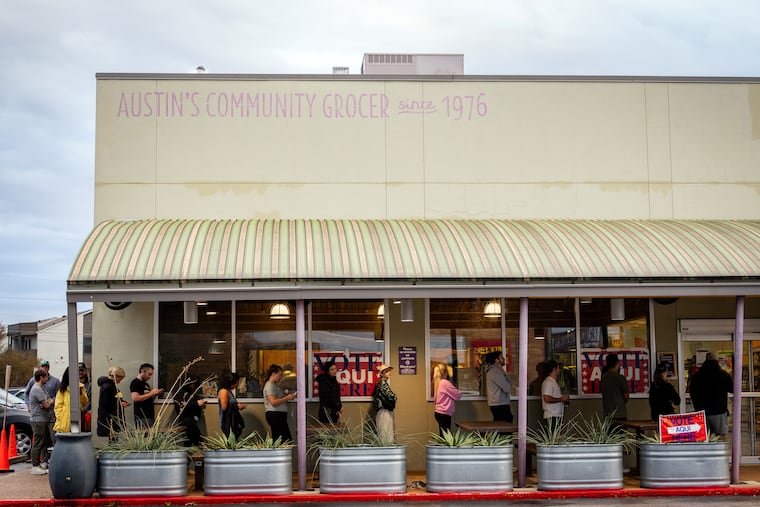
“This is where I shop. This is my supermarket. This is where I go. I’m not going to change that,” Harvie said.
Staff Writers Joe Yerardi, Anna Orso and Al Lubrano contributed reporting.