His doctor’s prescription for his unbearable pain seemed absurd. It worked.
Gregory Maassen was nearly bedridden by a burning sensation that was later diagnosed as a rare form of neuropathy. He has found relief riding his e-bike across the country.
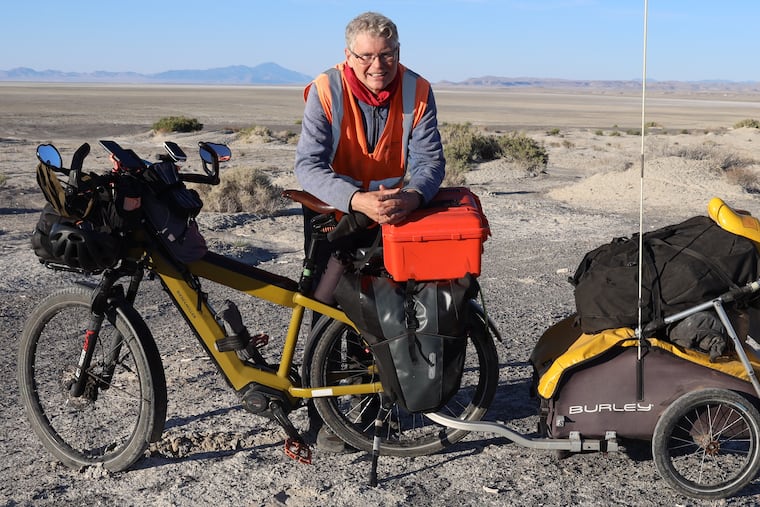
The burning sensation started near the top of Gregory Maassen’s left arm. It quickly spread to his upper back and chest, and within a month, his whole body was burning — from his ears to his feet.
Maassen, 51 at the time, spent most days in bed but struggled to sleep. He visited doctors who administered tests, including blood draws and an endoscopy, but none could pinpoint his medical condition. One doctor, Maassen said, thought the pain was due to mental illness.
He got sicker and sicker over a few months. He feared he was going to die.
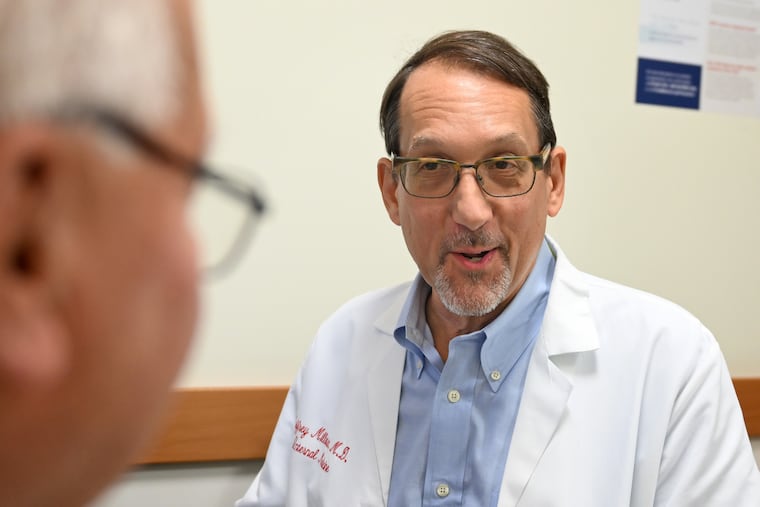
More than a year after his symptoms began, Maassen was losing hope of ever identifying his medical condition when he found Ahmet Hoke, a neurologist in Baltimore.
After a quick look at Maassen’s symptoms, Hoke correctly diagnosed him. The recovery plan Hoke gave Maassen in the following months changed Maassen’s life and unexpectedly led him to a therapy that became his passion: cycling.
After considering Maassen’s sudden and severe symptoms, Hoke diagnosed Maassen with small-fiber sensory neuropathy, a rare type of peripheral neuropathy that damages small nerve fibers. Since nerve conduction tests examine large nerve fibers, Hoke said, Maassen’s condition can sometimes go undiagnosed. While the likelihood of neuropathy increases with age, Hoke said about 0.1 percent of neuropathy cases match Maassen’s.
A skin biopsy in April 2019 confirmed Maassen’s condition. Many factors can contribute to neuropathy, including diabetes, chemotherapy, and autoimmune disorders, but Maassen said he believes he developed it from tick bites.
Hoke, who works for Johns Hopkins Medicine, prescribed Maassen medicine to manage his pain, including a gabapentinoid to treat nerve pain and an antidepressant that can also help with nerve pain. Maassen was relieved, but he was skeptical of Hoke’s other treatment plan: exercise.
“Are you out of your mind?” Maassen recalled thinking. He was so tired and sore that moving through daily life was difficult. He could hardly imagine exercising.
Exercise can regenerate nerve fibers and improve chronic pain for some neuropathy patients, Hoke said. Maassen, who left his contractor job with the U.S. Agency for International Development because of his illness, said he had no other hope.
He tried swimming and hiking but said the workouts were too demanding. He joined a biking group near his home in Northwest Washington that mostly consisted of 60- and 70-year-olds, thinking their pace would be moderate. But Maassen couldn’t keep up.
Some of the bikers were riding electric bicycles, which Maassen had not seen before. E-bikes come with a battery and a motor that can make cycling less taxing and reduce resistance on hills, but bikers still get exercise by pedaling, balancing, and steering. Maassen thought he found the perfect solution.
Still, after buying an e-bike in September 2019, Maassen felt exhausted on his first few rides around his neighborhood in North Cleveland Park and to-and-from local parks. But he said exercising improved his mood, so he kept returning to his e-bike. After a few weeks, his pain began to subside. His body felt better the more he rode.
“I never had a day that I said, ‘Oh no, I have to do it again,’” Maassen said.
Maassen started an e-bike group in the D.C. area in December 2019 called E-bike Lovers.
He had cycled thousands of miles and stopped taking his pain medication by the time he had a more ambitious idea in 2021: He would e-bike from D.C. to San Francisco over four months in 2022 by riding along the Lincoln Highway. Meanwhile, he would fundraise money for neuropathy research.
Even Hoke, who typically advises his neuropathy patients to walk, lift light weights or do Pilates, told the Post that he thought Maassen was “nuts.”
Maassen rode his e-bike with a nearly 80-pound trailer attached that included a tent, clothes for camping, an orange safety vest, a drone, a camera, an electric toothbrush, and jars of creamy peanut butter. He biked through snow, pouring rain, and heavy winds. He passed deserts, cornfields, and mountains. Each day, he tracked down outlets to charge his bike.
After traversing about 4,685 miles — about 65 miles per day — he had raised more than $179,000 from people he met along his route, other neuropathy patients, neurologists, family members, and friends, he said.
This year in March, Maassen started another cross-country bike ride traversing about 7,250 miles. He departed from West Palm Beach, Fla., and was expected to finish in Los Angeles on Tuesday morning. He has raised more than $31,500 for Johns Hopkins Medicine’s neuropathy center.
“I haven’t had a day in 2022, and also this year, that I say, ‘Well, do I really need to do this?’” Maassen said.
With the money Maassen is raising, Hoke said he’s working to develop medicine that will hopefully regenerate nerves as effectively as exercise for neuropathy patients.
Maassen, 59, said this will be his last cross-country bike trip, but he’ll find other ways to support neuropathy research. He promised his wife, Janet, that he would spend more time with her and their cat, Queenie.
“That doesn’t mean that I will stop cycling,” Maassen said.