Letters to the Editor | Aug. 7, 2026
Inquirer readers on pollution in Philadelphia’s waterways and the U.S. Immigration and Customs Enforcement ”speed trap” in Mount Holly Springs, Pa.
Clean rivers
A recent Inquirer article reported that Camden County is tackling a sewage problem in the Cooper River, with a real plan to make it swimmable.
Does the Philadelphia Water Department have a plan for the Delaware River?
I read in a recent PennEnvironment Research and Policy Center report that 12.7 billion gallons of untreated sewage and stormwater are dumped into the Delaware River every year. I’m glad I’m not a duck or a fish. I am, however, a Philadelphia resident who would enjoy recreating in our local waterways.
The report also states that half of this sewage discharges from just 10 of 164 untreated outflow pipes. A relatively modest infrastructure investment could dramatically improve water quality for everyone who wants to paddle, swim, or fish here — not to mention the wildlife.
I ask the Philadelphia Water Department to follow Camden’s lead and commit to a real plan to make the Delaware, the Schuylkill, and the streams that feed them clean and safe, even swimmable.
Peter Furcht, Philadelphia
. . .
Sewage flowing into the Delaware River does not appeal to me, but untreated water has been flooding into our beloved waterways more and more due to the increased heavy rainstorms this summer. While Camden County has made commitments to cleaning up the Cooper River, Philadelphia is far behind. Our city has a combined sewage overflow system in which 60% of water pipes are used for both stormwater and sewage. When there are intense storms, both rain and waste flow into the river.
According to a PennEnvironment report, this happened 65 times in 2025, with nearly 13 billion gallons of sewage overflow. This included 126 million gallons in Pennypack Creek alone, which flows near my house. Sewage contains viruses, parasites, and bacteria that carry the risk of illness to both people and animals who explore there.
The Philadelphia Water Department must keep local rivers and creeks clean by improving infrastructure to deal with sewage overflow. In Camden County, there will be a voter referendum this fall concerning funding for a plan to fix this problem. Philadelphia can also find a solution. The Water Department should follow Camden County and implement a plan that makes our rivers safe for drinking and swimming.
Judith Kotler, Philadelphia
. . .
Dozens of times throughout the summer, I receive alarming flash flood alert text messages informing me that very heavy rain is about to pummel my area and to seek shelter. I then worry about all the water flooding into the streets as it tries to flow into the storm drains, eventually overwhelming the sewage system, and polluting our rivers.
What Philadelphians may not know is that the Philadelphia Water Department has a combined sewer system, which means that when heavy rains overwhelm the system, raw sewage mixes with stormwater and then flows untreated into a nearby river or stream. Sewage in our rivers puts people at risk of getting sick, harms our wildlife, and opposes the goal of the Clean Water Act. Research shows that contact with contaminated waterways less than 24 hours after a combined sewer overflow increased the risk of acute gastrointestinal illness by 39%-75%, compared with recreational activity more than 24 hours after an overflow.
Philadelphia’s aging infrastructure wasn’t built for today’s population or the increasingly intense storms driven by climate change. The PWD needs to accelerate investments in green and gray infrastructure to rein in combined sewage overflows and protect public health, wildlife, and our waterways.
One of my favorite summer activities is going kayaking, and this year I kayaked on the Delaware for the first time. I hope I will be able to enjoy recreating on the rivers that cradle Philadelphia for years to come.
Emily Levine, Philadelphia
Protect and serve
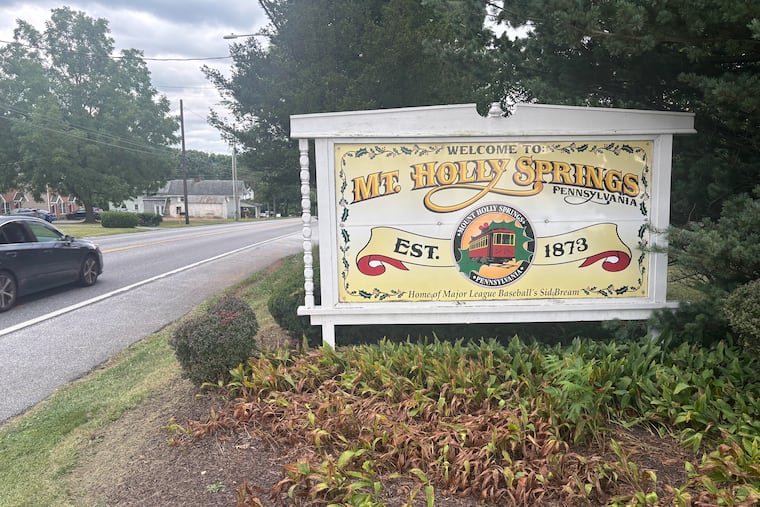
Thank you for your multifaceted coverage of our immigration crisis. Will Bunch’s coverage of the immigration “speed trap” in Mount Holly Springs, Pa., evoked memories of the two opportunities I have had to work in cities with community policing. Officers took seriously their pledge to protect and serve, working to build community, encouraging all residents to call if they needed help, and to come forward if they had witnessed a crime. It was a win-win situation for police and the community they served. That is a different kind of police force than one willing to help capture Wu Shaoping and others like him, a force willing to fracture families for an extra allowance with little connection to road safety. For U.S. Immigration and Customs Enforcement, working with local police, delaying renewal requests of Deferred Action for Childhood Arrival (DACA) recipients and other immigrants in the process of improving their status makes more sense these days than continuing the work done in Minneapolis.
ICE is helped by a partisan Congress and a U.S. Supreme Court willing to send Haitian families back to a country where the U.S. government has warned Americans not to travel, with “violence having left thousands dead and displaced more than 1.4 million people.”
Clearly we have moved way beyond the “worst of the worst.” It is now the work of the electorate to protect and serve both our neighbors and our democracy.
Thank you for keeping us informed.
Sister Veronica Roche, Westmont
Voter suppression
Sen. Dave McCormick, Pennsylvania’s junior U.S. senator, has predictably taken exception to The Inquirer’s analysis of the SAVE America Act, which is currently before Congress. In a recent letter to the editor, he goes so far as to urge Inquirer readers to consider other sources of information for “a more thoughtful and honest appraisal of what the bill does.” According to the nonpartisan Brennan Center for Justice (presumably a reliable information source), if the SAVE Act were passed, it would block millions of eligible American citizens from voting. Viewed in a broader context, the SAVE Act is of a piece with other voter suppression measures being actively promoted by President Donald Trump and his allies. Such measures include wide-ranging congressional redistricting efforts, which are tantamount to state-sponsored, racist gerrymandering. More recently, Trump issued an executive order dictating new, restrictive standards for determining vote-by-mail eligibility, despite the lack of any lawful authority to do so. Any voter bringing common sense to bear on this issue (as McCormick recommends) must surely recognize that these tactics are more about improving the prospects of Republican candidates in future elections than about enhancing election integrity. In fact, earlier this month Trump gave away the game with the telling observation that, in the event the SAVE Act is passed, “we will not lose an election for 100 years.” In short, today’s GOP is fixated on maintaining majorities in both houses of Congress, by hook or by crook.
Patrick J. Hagan, Ardmore
Turn files into trials
Remember how the Jeffrey Epstein files got released and nothing happened? Because they were in the wrong hands. On July 15, a bipartisan group of congressional representatives introduced HR 9694, the Epstein Files Transparency Act II, which allows state attorneys general and district attorneys access to the entire Epstein file. I and other activists have been advocating for this amendment since February because it addresses the two biggest roadblocks to “turning the files into trials”: 1) the fact that the U.S. Department of Justice has said (and demonstrated) it’s not going to prosecute — so turning the file over to a different set of prosecutors is the only way prosecutions are going to happen, and 2) the fact that a large body of highly probative evidence — the videotapes Epstein allegedly made of sex acts, which is evidence of crimes actually being committed, with perps recognizable with facial recognition software and timestamps that can establish the exact age of the victim — simply can’t be released to the public because of the graphic nature of that evidence. Giving the files to state AGs is the only way we’re going to get justice for the survivors, and establish that we, as a society, will never, ever, ever allow these crimes to go unpunished. If we really care about protecting children, we’ll pass this law.
Linda Falcão, Baltimore
Join the conversation: Send letters to letters@inquirer.com. Limit length to 150 words and include home address and day and evening phone number. Letters run in The Inquirer six days a week on the editorial pages and online.