Smoky skies may be gone for now. But ‘climate grief’ may linger.
Feelings of anger, hopelessness, dejectedness, and even confusion about global warming are all totally normal. What’s important is how we navigate those feelings.
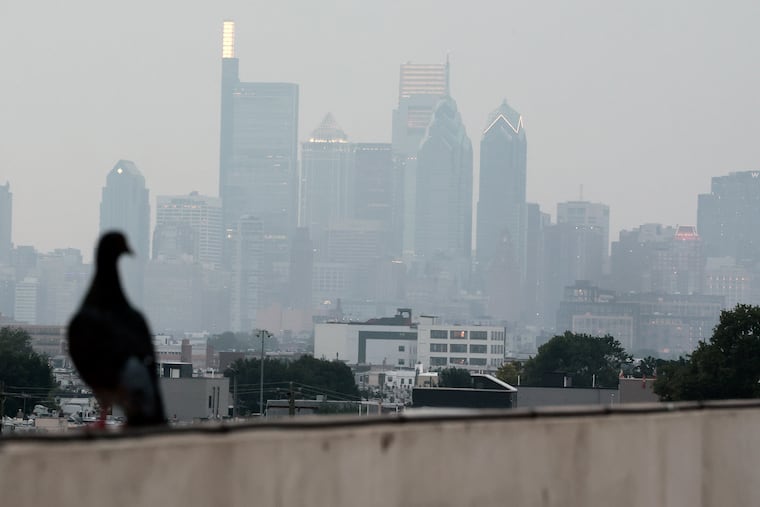
Waking up to hazy skies and an eerily orange sun can feel more like a scene from an apocalyptic science fiction movie than reality. Yet, Philadelphians did just that earlier this month.
Smoke from the Canadian wildfires has made its way to the East Coast and, along with it, an Air Quality Index, or AQI, reading that came close to 300 across the region. For context, when the AQI reaches over 50 it can affect folks with asthma and other respiratory illnesses. The general public will start experiencing symptoms and negative health impacts when the AQI hits 150. An AQI in our area of 300 is as uncommon as it is dangerous.
This isn’t the first time Philadelphians have contended with the impacts of wildfire smoke during the summer months, but what’s occurred this month stands out from summers past. The last time the AQI reached similar levels was during a series of fires in Quebec in June 2023, with the AQI soaring over 400.
For East Coasters, this is a relatively new and infrequent phenomenon, but the West Coast has been contending with real life impacts of wildfires for much longer. I experienced them for the first time while living in the Bay Area. I was there in September 2020, on the day when the smoke was so thick it blocked out the sun, making the afternoon look like the middle of the night. The thought of that day still haunts me.
In the aftermath, I felt scared, frustrated, and filled with dread. When I eventually found the words to describe the experience, it was like a light bulb went off. The gauzy skies finally made the abstract concept of “climate change” into something very, very tangible and undeniable. It’s hard to deny that we’re in the midst of a climate crisis when the crisis shows up on your doorstep.
There’s a term for this awareness of and emotional response to the environment in dire crisis — “climate grief.” In the coming days, Philadelphians may experience this grief firsthand for the first time. Climate grief manifests itself differently for everyone, and feelings of anger, hopelessness, dejectedness, and even confusion are all totally normal. What’s important is how we navigate these feelings, both as individuals and a community.
» READ MORE: Smoky skies? Throw shade at the fossil fuel industry. | Opinion
There are small things we can do to protect ourselves and our family when the AQI hits triple digits. We can try to limit our exposure to bad air quality, but let’s be realistic — we all have jobs or classes to go to, kids to pick up, or errands that can’t wait.
Wearing an N95 mask is the best way to protect your health, along with the health of your kids and even pets.
You can join an environmental and community advocacy organization, like Philly Thrive, to fight back against harmful policies and corporations.
You can also reach out to your elected officials in the state and federal government and demand that they prioritize laws that protect our health and environment.
As the smoke clears, please don’t let the memory slip away or give up on fighting for our community. As a city, we’re gritty, steadfast fighters and we do not easily forget being wronged. Now is the time to act, show up for the environment, and show the world what Philadelphia is really made of.
Erin Fitzgerald is a native Philadelphian who currently works as a communications strategist and environmental advocate.